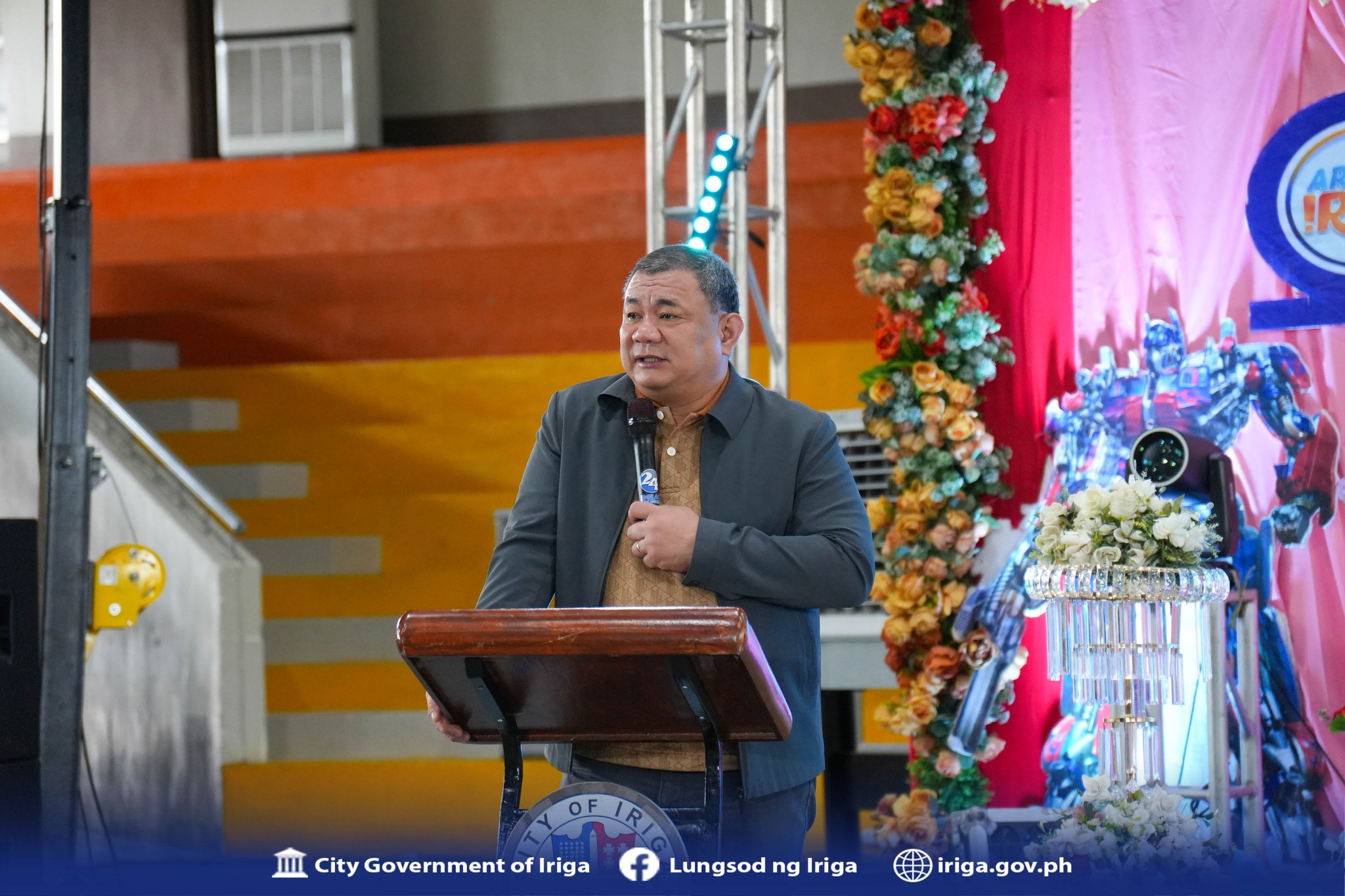
The City Government of Iriga successfully convened the Children’s Congress 2025 on December 12, bringing together more than 500 participants from various community sectors in a unified celebration of children’s rights, protection, and development. The activity served as a flagship event of the National Children’s Month observance and reflected the city’s sustained commitment to building a safe, inclusive, and empowering environment for every child.
Participants came from community sectors that help shape Iriga’s next generation, including punong barangays, barangay officials on women and children, Sangguniang Kabataan officers, Pag-asa Youth Association of the Philippines representatives, Child Rights Workers, children with disabilities, Indigenous Peoples Mandatory Representatives and IP youth, child leaders, and students from 18 public and 5 private schools across the city.
The program opened with a welcome message delivered on behalf of Vice Mayor Edsel S. Dimaiwat, represented by Councilor Jor-El O. Caayao. In his remarks, he reminded participants that “all children are a gift.” He also recognized the talents and creativity of Irigueño youth, highlighted the importance of values formation including the Filipino expressions of respect po and opo, and reiterated the city’s commitment to providing quality and holistic education under the Arriba Administration.
Councilor Melnan R. Murallo-Asanza, Chair of the Committee on Children and Family Relation, delivered an inspiring message highlighting the role of local legislation in advancing child development and protecting children’s welfare.
A key highlight of the congress was the State of the Children’s Report delivered by Mayor Rex C. Oliva, which emphasized that children make up nearly half of Iriga City’s population and remain at the heart of local governance. He reaffirmed the city government’s commitment to protecting children’s rights and investing in programs that uphold their survival, development, protection, and participation. Anchored on the Iriga City Children’s Code and guided by the principle “Uda Mawatak, Uda Matagak,” the report outlined a consultative and inclusive approach to governance that responds to the real needs of children and families. While significant progress has been made and the city has earned recognition for its child protection efforts, the Mayor acknowledged that challenges remain, particularly in addressing abuse, online risks, and the needs of vulnerable children. He emphasized that these realities call for sustained collaboration among government, families, and communities to ensure that every Irigueño child is protected, heard, and supported.
The program also featured “Usapang Makabata,” a heartwarming and engaging session where children confidently asked questions and shared their thoughts directly with Mayor Rex C. Oliva. With curiosity and honesty, the young participants raised concerns about their schools, communities, and daily lives, creating a lively and meaningful exchange. The session reflected the city’s commitment to listening to children’s voices and recognizing them as active partners in governance, while showing that in Iriga City, even the youngest citizens are heard and valued.
Also present during the event were Councilor Margarita B. Cabria, the Indigenous Peoples Mandatory Representative, and sectoral representatives who continue to play a vital role in shaping programs and policies for the city’s youth.
This year’s Children’s Congress carried the theme “OSAEC–CSAEM: WAKASAN! Kaligtasan at Karapatan ng Bata, Ipaglaban!”, reinforcing Iriga City’s proactive stance against online sexual abuse and exploitation of children. Through expert led discussions facilitated by the City Social Welfare and Development Office and partner agencies, children and stakeholders were equipped with essential knowledge on responsible social media use, disaster preparedness, and child protection laws.
Through the Children’s Congress 2025, the City Government of Iriga reaffirmed that the protection and development of its children remain a central priority, with programs and policies centered on the needs and rights of every child.
Source: Lungsod Ng Iriga