
THE Philippines has again secured a $500-million loan from the World Bank through the Fourth Disaster Risk Management Development Policy Loan with a Catastrophe-Deferred Drawdown Option (CAT-DDO 4).
The World Bank said that the Philippines can use the option, the country’s fourth, to easily secure funding needed to manage financial impacts brought about by disasters and disease outbreaks.
The full amount of the loan, roughly P25.165 billion at current exchange rates, is available for three years after the effectiveness of this project. The government can renew this line of protection with the World Bank for up to a total period of 15 years.
“This contingent funding mechanism protects the Philippines’ fiscal health following natural disasters and disease outbreaks, helps develop sustainable risk financing mechanisms for local government units, and cushions poor and vulnerable households from the impact of disasters,” according to Ndiamé Diop, World Bank Country Director for Brunei, Malaysia, Philippines and Thailand.
“If not managed well, these shocks can exacerbate poverty through the loss of lives, destruction of assets, disruption of economic activities and trade, and indirect impacts on health, mobility, and access to education,” Diop added.
The Philippines has received three other CAT-DDO loans in 2018, 2014 and 2011. Each CAT-DDO amounts to $500 million. The CAT-DDO in 2018, which was only in effect for two weeks, was obtained in the wake of the Typhoon internationally-known as Mongkhut but named Ompong in the Philippines. The republic received two CAT-DDOs from the World Bank that had an effectivity of three years. The first one was approved in 2011 and was closed in 2014. The second one was approved in 2015 and expired in September 2018.
The country can access the funds upon the declaration of a State of Calamity by the Republic of the Philippines due to an imminent or occurring natural catastrophe or a declaration of a State of Public Health Emergency.
According to Lesley Jeanne Y. Cordero, senior disaster risk management specialist of the World Bank, the policy reforms supported by the CAT-DDO 4 are critical given the implementation of the Supreme Court Ruling on the Mandanas case and the coming devolution transition phase of functions identified in the 1991 Local Government Code.
The fourth CAT-DDO also supports government efforts to integrate climate risk management in the preparation of provincial commodity investment plans among local government units (LGUs), which can lessen the extent of agricultural and fisheries damage resulting from natural hazards and extreme weather events.
“The reforms supported by the program enables local governments to take stock of climate actions, track and report climate change expenditures to inform investment planning and programming for risk resiliency,” Cordero said.
The new lending operation supports on-going government efforts to strengthen disaster response and recovery policies and planning.
This includes mainstreaming the use of pre-approved Disaster Rehabilitation and Recovery Plans to speed up access to funding from the national government for post-disaster recovery.
In the aftermath of disasters, skilled workers in areas like construction, welding, electrical installation and maintenance, pipe-laying, heavy equipment operation, and food production are crucial for reconstruction and rebuilding. Part of the program will support strengthening delivery of community-based technical and vocational training.
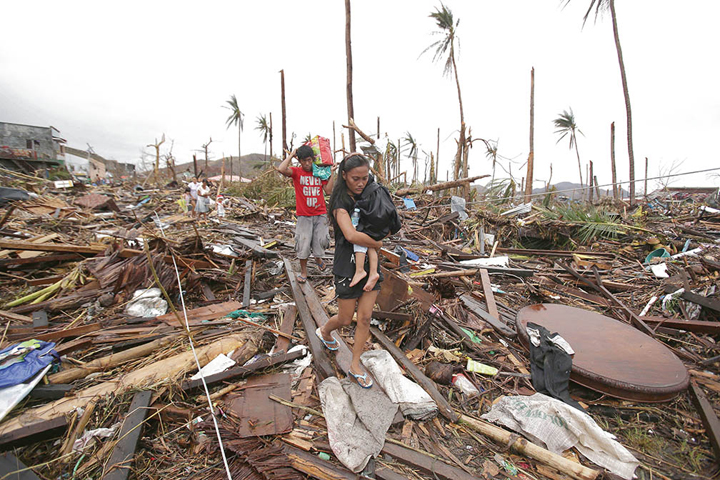
The World Bank noted that the Philippines is highly vulnerable to multiple hazards due to its unique geography. The country is the ninth most affected country globally from extreme weather events, second highest ranked among Asian countries based on the World Risk Index 2020.
Around 60 percent of the country’s total land area and at least 74 percent of Filipinos are vulnerable to multiple hazards, including typhoons, earthquakes, floods, storm surges, tsunamis, volcanic eruptions, and landslides.
Typhoons accounted for around 90 percent of the damage in recent years. In the past thirty years, 33,000 people have died, and 120 million people have been adversely affected by natural disasters.