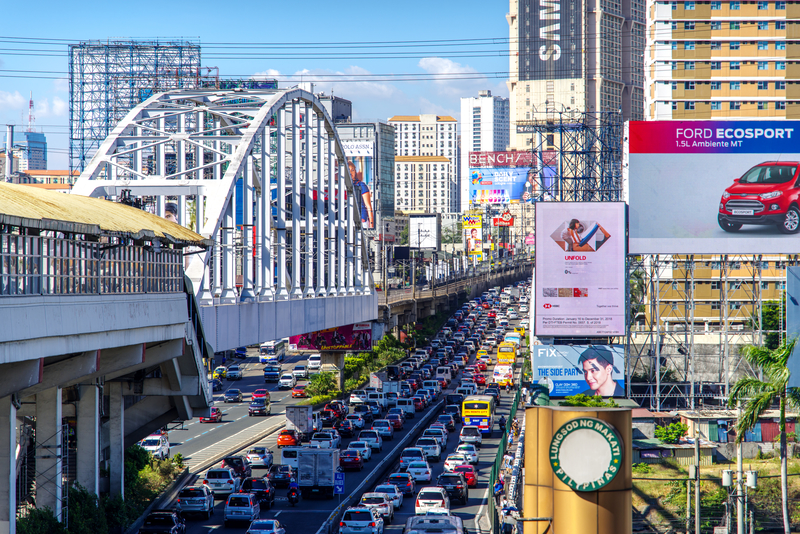
IF cities will bring down speed limits, international transport experts believe this will improve mobility and make it safer for city dwellers in a post-pandemic world.
In a Transport Development blog, Practice Manager for Transport Europe Karla Gonzalez-Carvajal and World Bank Transport Specialist Elena Lungu said a speed limit of 30 kilometers per hour (kph) should be made the standard in cities where cars, cyclists, and pedestrians often interact.
Gonzalez-Carvajal and Lungu said studies have already established that speed accounted for around 30 percent of fatal transport-related accidents. Further, the authors said, people have a higher chance of surviving a road accident if the car or truck is traveling at 30 kph.
“Lower speeds protect everyone, especially vulnerable people like children, cyclists, pedestrians, the elderly, and people with disabilities. People have a 90 percent chance of surviving after being hit by a car or a truck going at 30 km/h, but less than 50 percent at 50 kph or higher,” the authors said.
In the country, based on the latest data released by the Philippine Statistics Authority (PSA), some 11,612 deaths were caused by transport accidents annually between 2015 and 2020. Almost all these accidents were road accidents at 11,579 annually in the same period.
Prior to 2020, deaths linked to transportation accidents steadily increased to 12,799 in 2019 from 12,536 deaths in 2018; 11,399 in 2017; 11,292 in 2016; and 10,033 in 2015. The highest increase was between 2015 and 2016 of 12.5 percent followed by 2017 to 2018 which recorded a growth of 9.97 percent.
Meanwhile, the experts said lower speeds will also be good for the health of residents and the overall health of the planet. Lower speeds will encourage city residents to live more active lifestyles and would also reduce the carbon footprint of urban areas.
Gonzalez-Carvajal and Lungu said the European Environment Agency found that reducing motorway traffic speeds to 110 kph from 120 kph would lead to 12 to 18 percent fuel savings.
“Many cities in Europe are already moving toward slower speeds, with considerable gains in terms of road safety and quality of life. Brussels and Paris have introduced 30 kph limits in order to improve air quality and reduce noise pollution and traffic collisions,” the authors said.
They also said that by the end of this year, the Dublin City Council’s Transportation Department will also adopt the 30 kph rule while the Spanish government will not only lower speed limits, but also increase fines.
Other cities like Luxembourg have extended the 30 kph rule in all built-up areas while Oslo and Helsinki did not record a single road accident involving a pedestrian or cyclist last year due to slower speeds.
“Low speeds are key to creating livable streets, which are at the heart of the 2030 Agenda for Sustainable Development and can facilitate many of its targets,” Gonzalez-Carvajal and Lungu said.
“In a bid to create a safer, more sustainable future, the ‘Streets for Life’ approach aims to build on some of the key Covid-era innovations that have been redefining transport and urban development: slower traffic speeds; open space for pedestrians, bike and scooter riders, or kids playing on sidewalks; and even the outdoor safe-dining ‘streeteries’ that have opened up in many of the world’s cities,” they added.