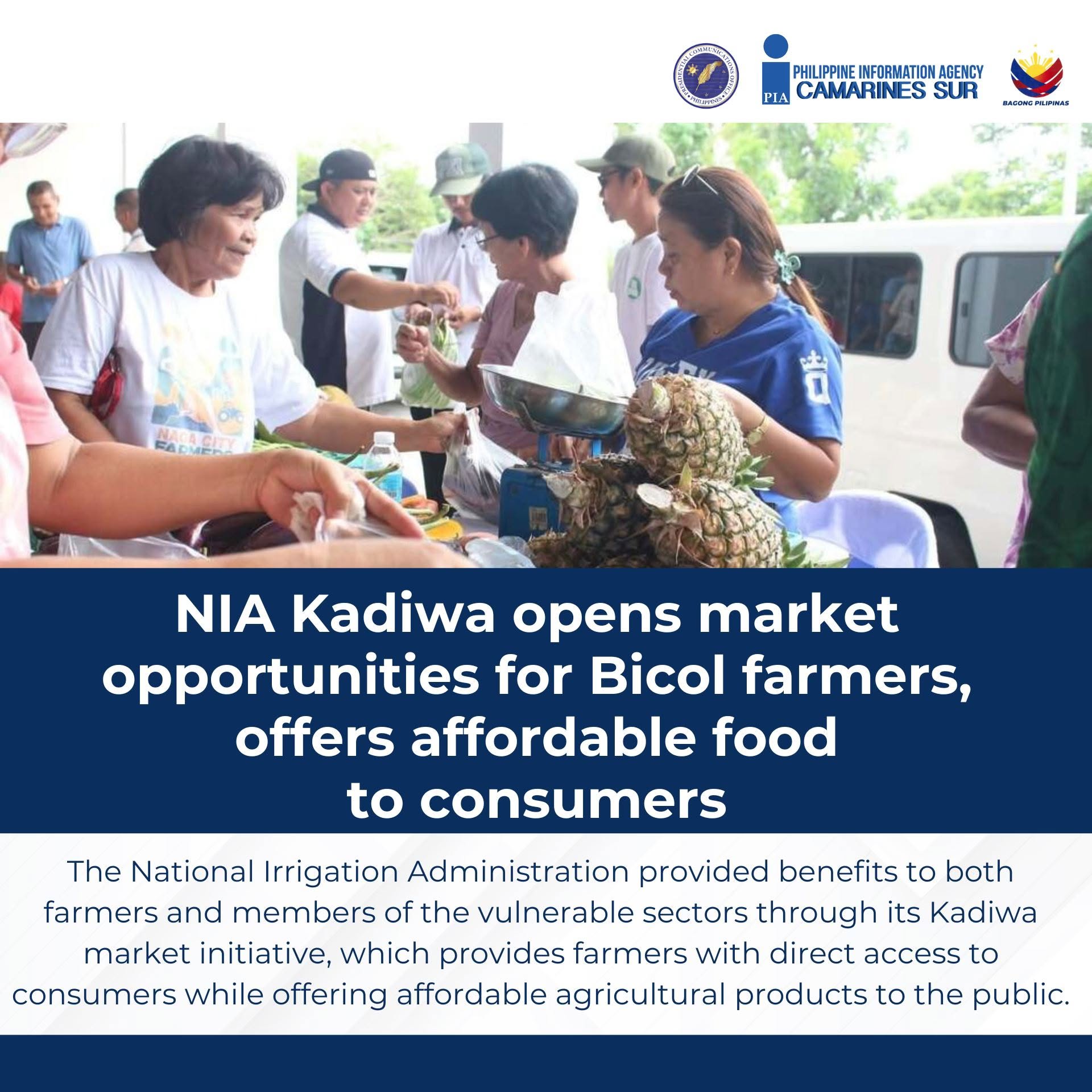
The National Irrigation Administration (NIA) provided benefits to both farmers and members of the vulnerable sectors through its Kadiwa market initiative, which provides farmers with direct access to consumers while offering affordable agricultural products to the public.
During the Kadiwa market organized by the NIA Regional Office in Naga City on June 23, Tuesday, farmers were able to sell their produce directly to buyers, allowing them to earn better income. At the same time, consumers, particularly those from vulnerable sectors, were able to purchase affordable rice and locally made products.
Ma. Cleofe Baraero, NIA Bicol spokesperson, said the initiative creates a win-win situation for both producers and consumers by giving farmers a direct marketing platform while making essential goods more accessible to the public.
Rice was sold at P40 per kilogram to senior citizens, persons with disabilities (PWDs), solo parents, and Indigenous Peoples, with each buyer allowed to purchase up to five kilograms.
Members of the general public, meanwhile, were allowed to buy up to 10 kilograms at P45 per kilogram.
Baraero said the Kadiwa market has provided farmers with an opportunity to showcase and directly sell their products, while also benefiting consumers through lower-priced goods.
“Farmers are very thankful na mayroon silang avenue para i-display ang kanilang mga produkto,” Baraero said. “Ang impact nito transcends hindi lang para doon sa mga irrigators association natin and the farmers but also for the public who are always looking for mas murang bilihin.”
Among the participants was the Gahonon-Borabod-Gubat-Tagontong Irrigators Association Inc. of Daet, Camarines Norte, which has been joining the Kadiwa program for several years.
Its president, Daniel Estrella, said the initiative allows their group to sell quality rice at lower prices by eliminating middlemen.
“Napakamura kung ikukumpara natin sa public market,” Estrella said, adding that farmers continue to face challenges caused by disasters like drought, typhoons, and other economic factors such as the fluctuating fuel prices.
“Nagpapasalamat din tayo na patuloy yung monitor ng NIA sa aming mga source ng tubig,” he said, referring to preparations for the effects of the El Niño phenomenon.
The program also provided exposure to local micro entrepreneurs such as Emmylou Delos Santos of Pili, Camarines Sur, who showcased her locally produced chili oil.
“Tig-grab ko na po ‘yong opportunity na tig-invite po ninda ako digdi kasi dagdag promotions kan sakuyang produkto,” Delos Santos said.
Consumers welcomed the initiative, which brought fresh produce and locally processed goods closer to communities. Fruits, vegetables, spices, and other food products were available during the one-day market.
“Nagpapasalamat ako digdi sa mga panindang ini ta medyo harani samuya, dae na ako mapunta sa market ta dae mi na kaya magpunta,” said Lolita Alvarez, a resident of a subdivision near the NIA office in Naga City.
Beyond serving as a marketplace, the Kadiwa program supports the government’s efforts to strengthen food security and improve access to affordable agricultural commodities.
Baraero said NIA continues to enhance irrigation services and related support programs to help farmers sustain production amid climate-related challenges while ensuring a stable food supply for communities.
Source: PIA Camarines Sur