RISING consumer prices, low output and the country’s inability to control Covid-19 cases are holding the economy hostage, preventing the country from making real advances to recover from the pandemic-induced economic disruption, an international think tank said.
Moody’s Analytics – the research arm of Moody’s Group – issued the stern warning on Friday, after the Bangko Sentral ng Pilipinas (BSP) chose to keep policy rates unchanged at record low levels despite the expectation that inflation will breach their target for the year.
“The Philippine economy is in a worrisome state. Elevated inflation, a large output gap, a recent resurgence of Covid-19 infections, and limited vaccine availability are all reasons for concern,” Moody’s Analytics Economist Katrina Ell said in their most recent economic bulletin for the Asia-Pacific.
“With these challenges, it was not surprising that the Bangko Sentral ng Pilipinas looked past the recent above-target inflation and kept monetary settings accommodative in March, with the policy rate remaining at a record-low 2 percent, where it has been since November,” Ell added.
The Philippine economy recorded its worst gross domestic product (GDP) contraction since the 1940s in 2020, declining by 9.5 percent during the year.
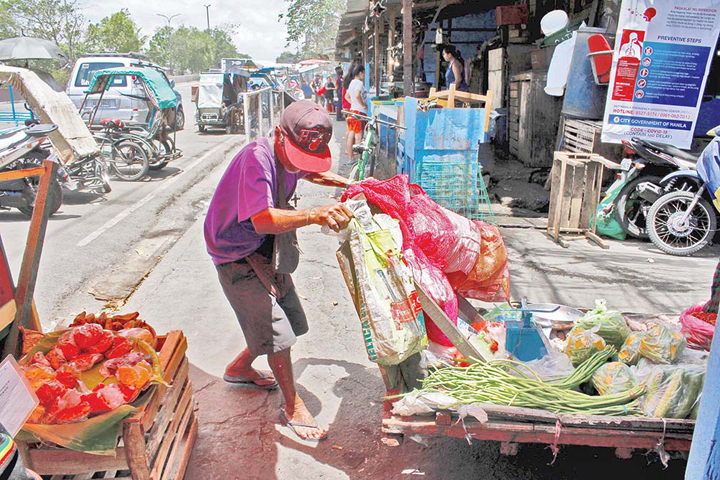
On top of that, the growth of consumer prices is starting to accelerate. Inflation hit its highest in two years in February at 4.7 percent. On Thursday, the BSP also warned of higher inflation. They revised their average inflation forecast for the year to 4.2 percent, admitting that current price conditions will lead to their 2 to 4 percent target breach in 2021.
Also on Friday, the Philippines posted another all-time high in its Covid-19 cases at 9,838 during the day. The Philippines’ total number of cases is now at 702,856.
Vaccinations are also a problem in the country. According to Ell, the government’s inability to make vaccines available to the country adds another big area of concern.
“Vaccine availability has been limited, putting the Philippines at continued risk of further outbreaks in the near term. Recent reports indicate that the archipelago has so far only received enough vaccines for 1 percent of the population, with current estimates indicating that the population won’t be fully vaccinated until 2023,” Ell said.
“The government is opposed to national lockdowns, but the recent spike in local infections means that the economic recovery could easily be further stalled at least through the first half of 2021,” the economist added.
Moody’s Analytics’ earlier forecast for the country’s GDP is a growth of 6.3 percent for 2021 mainly due to base effects. However, Ell said this forecast has “significant downside risks at this stage” and will be up for review in their early-April forecast round.
Image credits: Bernard Testa