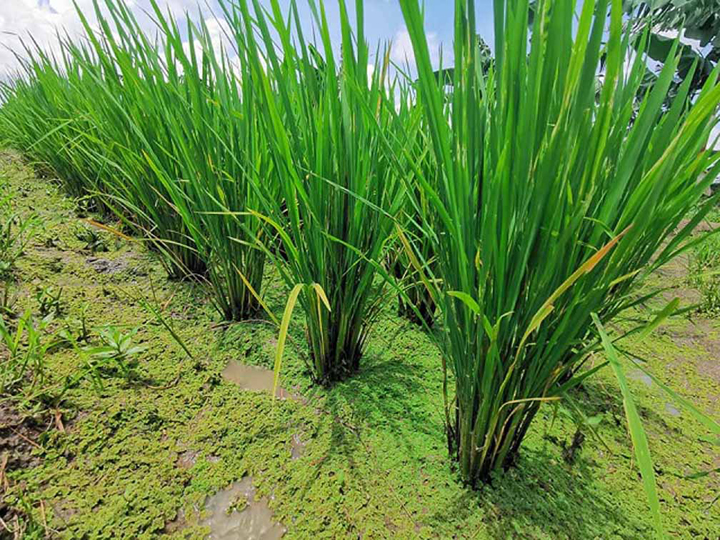

Filipino rice farmers may save as much as P17,500 per year if they intercrop palay with azolla particularly in irrigated areas as it can help cut their fertilizer expenses, the Philippine Rice Research Institute (PhilRice) said.
PhilRice said a recent study by its researchers showed that azolla, a fern that thrives in freshwater, maintains a symbiotic relationship with the blue-green algae Anabaena azollae, creating a sustainable environment for nitrogen production.
“The algae provide nitrogen to the fern and the fern provides a habitat for the algae. This symbiosis allows the conversion of nitrogen into ammonia, which can be used by rice plants when incorporated into the soil,” said the PhilRice, an attached agency of the Department of Agriculture (DA).
Cielo Luz C. Mondejar, DA-PhilRice researcher, said their computation showed that farmers can save about P17,500 per year “if they use azolla as biofertilizer for rice.”
“It can also increase their rice yield to 1 [metric ton per hectare],” Mondejar said in a recent statement.
If azolla covers the floodwaters of 1-hectare rice paddy, it can supply 30 kilograms of nitrogen, which can replace at least 50 percent of the inorganic nitrogen requirement of rice without lowering the yield.
“The azolla-anabaena association can fix about 1.2 [kilogram of nitrogen per hectare] daily or about 864kg N/ha annually, which is equivalent to about 34 bags of urea,” she said.
PhilRice said Mondejar and her team put up a demonstration farm at DA-PhilRice in Negros to show the benefits of azolla in rice production.
“Many studies have been done on the effectiveness of azolla as an alternative or supplementary fertilizer in flooded rice cropping systems,” Mondejar said.
“One of these studies revealed that it increases humus content, which ultimately improves the physical, chemical, and biological soil conditions. Another study showed that azolla intercropped with rice also reduces weed population.”
PhilRice said an earlier study of its researchers showed that growing azolla in the rice field is a good way “to minimize golden apple snail damages in transplanted rice.”
“We’re putting up this demonstration farm for more farmers to know about the benefits of Azolla in rice production,” she said. Mondejar said the demo farm, which was put up in January, also demonstrates the viability of azolla in fertilizing vegetables and feed to animals such as ducks, chickens, and tilapia.
“With 22 percent to 37 percent crude protein content of azolla, farmers could raise livestock and poultry without the need for high protein commercial feeds,” she added.
Image courtesy of www.philrice.gov.ph