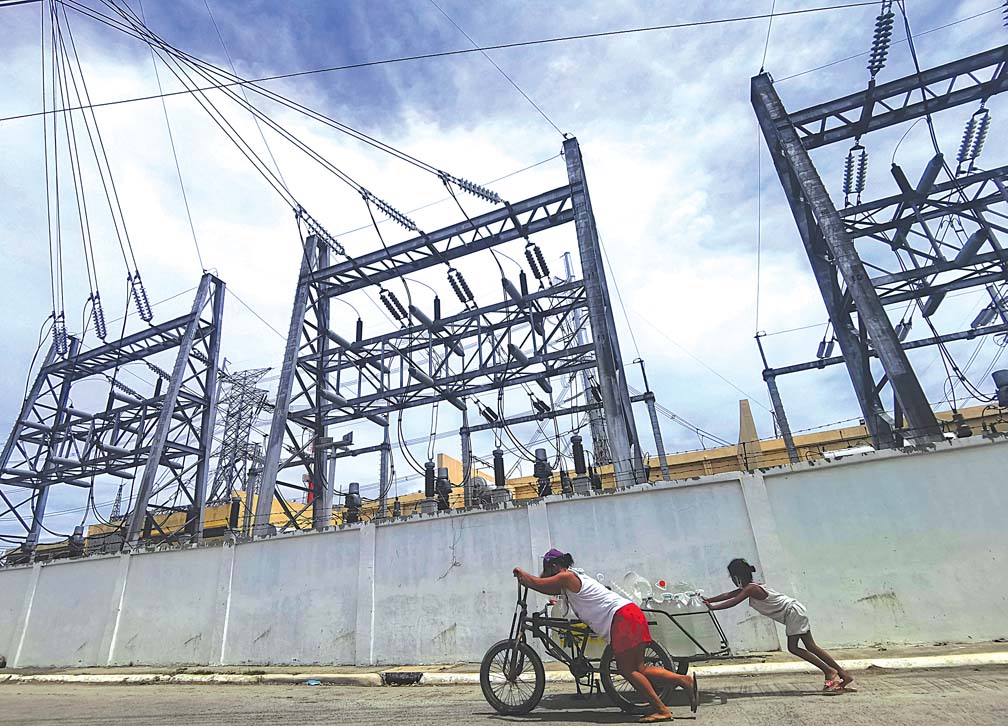
THE National Grid Corporation of the Philippines (NGCP) on Friday assured that it would complete several large transmission projects within the next few months to help strengthen the transmission system and better support the power system.
“It should be finished. President Anthony Almeda will not accept further excuses of delays. We will make sure that these will be finished this year,” said NGCP spokesperson Atty. Cynthia Alabanza during an online news conference.
Among these transmission line projects include the Mindanao-Visayas Interconnection Project (MVIP), Cebu-Negros-Panay, and Hermosa-San Jose.
The grid operator also stressed the importance for a holistic approach to power planning. “Development in all sectors involved in the power industry must be coordinated, with due attention given to each. We support the Department of Energy in all its efforts, and we are confident of its continued support to all sectors,” the company said in a statement.
It assured the public and its stakeholders that the grid operator is exerting all efforts to implement all necessary solutions to prevent any similar grid incident.
A system disturbance and widespread power outages occurred in Panay Island between April 27 and 29. Last May 8, NGCP’s Bolo-Masinloc 230kV transmission line 2 tripped, which led to the tripping of Masinloc Units 1&2. Thereafter, a red alert warning was raised in the Luzon grid.
NGCP said that while there were grid incidents monitored in both the Luzon red alert last May 8, as well as the Panay Island outages, “These incidents by themselves, ought not to have caused the effects seen.”
“In the case of Panay Island, NGCP’s protection systems, which were communicated and coordinated with its grid connected customers from both the generation and distribution sides, functioned as intended,” the company explained.
“As we explained to Congress yesterday, only the consumers connected to the line that tripped should have been disengaged from the grid. It was unfortunate that a power plant disengaged from the transmission system unexpectedly. This response from the generating unit is both unexpected and undesirable. The resulting undervoltage and underfrequency was severe and unrecoverable, and was the direct cause of the tripping of other power plants connected to the system, and ultimately, the Panay sub-grid collapse,” NGCP said.
With regard to the Luzon red alert, the NGCP said the Bolo-Masinloc 230kV Line 2 operates with a redundancy. The load carried by Line 2 when it tripped was automatically transferred to Line 1. Each of Lines 1 or 2 is more than capable to singularly carry the entire loading of the Bolo-Masinloc 230kV facility at any time. “It should have ended there. Similarly, there was an unexpected and undesired response from a generating plant which tipped the balance of supply and demand, and a red alert was raised,” NGCP said.
The NGCP stressed that prior to the occurrence of the faults, unplanned outages of plants and the deration of other plants contributed to the situation. “These unplanned outages are outside of the Grid Operating and Maintenance Program planned well ahead and coordinated by NGCP with the power plants and approved by the Department of Energy,” it added.