THE Philippines is among the countries that have undergone numerous catastrophes and tragedies, whether natural or man-made.
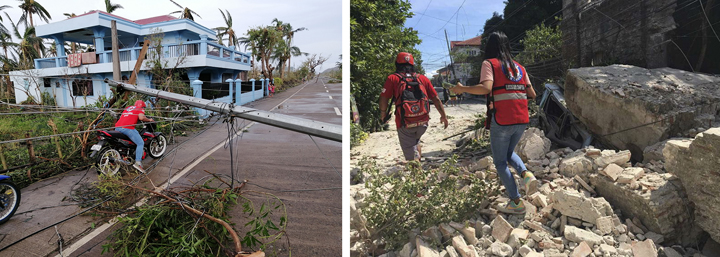
Being seated in the Pacific’s “Ring of Fire” makes it highly vulnerable to earthquakes and volcanic eruptions. This tropical nation, likewise, experiences at least 20 typhoons yearly on the average. It’s not even spared from the impacts of climate change in the past recent years: think Haiyan (Yolanda), billed as the strongest cyclone ever to hit land.
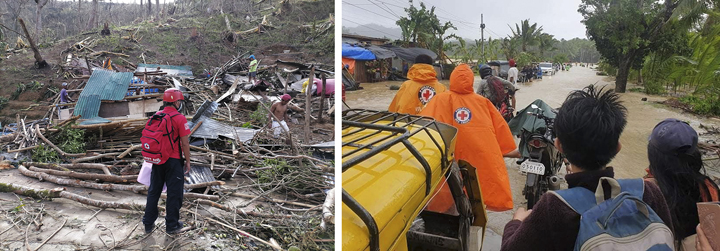
As if the natural calamities were not enough, the country had to deal the past three years with the pandemic. While the ensuing health crisis situation has somewhat eased, it still faces the threats of Covid-19, fully recovering towards post-pandemic. Beyond all these adversities, Filipinos often find themselves at the center of several conflicts and violence here and abroad.
Fortunately, the Philippine Red Cross (PRC) has always been there for Filipinos to turn to in times of need and emergencies. Through the years, the country’s foremost humanitarian organization has never failed to extend assistance or be of good service to every Filipino anytime, anywhere.
Humble beginnings
DOWN memory lane, a closer look at its past makes everyone appreciates more the PRC, which turns 75 today (April 15), as a bastion of heroism and compassion that never ceases to amaze and inspire every Juan to also do good unto others.
Leafing through the pages of its memoir reveals that it was Apolinario Mabini, the heart and brains of the Philippine Revolution, who paved the way for its inception when he encouraged the founders of the Malolos Republic to approve the Constitution of the National Association of the Red Cross on February 17, 1899, with Hilaria del Rosario de Aguinaldo as the appointed president.
From just being a local unit of the American National Red Cross at the turn of the 19th century, forming the standalone Philippine branch of the Red Cross was initiated by President Manuel L. Quezon in 1934. Since his Commonwealth government could not sign the Geneva Conventions, it did not push through—until the country became independent from the American regime.
On February 14, 1947, President Manuel A. Roxas inked the Treaty of Geneva and the Prisoners of War Convention. Over a month after, he signed Republic Act 95, mandating the creation of the PRC. This was followed by Aurora Aragon Quezon, the organization’s first chairman, receiving a cable from Geneva, which meant the recognition for the PRC, as per approval of the International Committee of the Red Cross (ICRC).
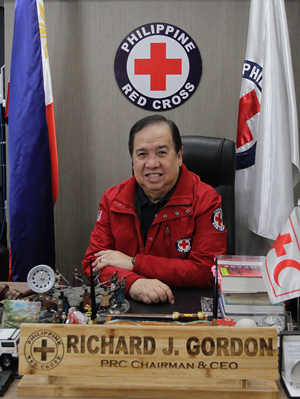
The PRC’s charter has been amended several times since its creation. In 2010, then President Gloria Macapagal-Arroyo signed into law Republic Act 10072, otherwise known as the Philippine Red Cross Act of 2009, penned by Senator and Philippine National Red Cross (PNRC) Chairman Richard J. Gordon. Officially, it changed the name of PNRC to PRC.
Since then, the organization has grown by leaps and bounds. Starting off with merely 13 chapters in 1947, the PRC is currently comprised of 102 chapters, serving millions of Filipinos nationwide.
From blood letting to lifeline
BECAUSE the Philippines was under tumultuous times during the formative years of this philanthropic association, its primary role back then was to collect blood from donors.
“The Red Cross was known for blood in 1947, when we got our independence [and, then,] when we first got our Charter by International Convention. Also, disasters were forthcoming in the 1950s, [with the rise of the] Hukbalahap [Hukbong Bayan Laban sa Hapon],” Gordon told the BusinessMirror in an interview. “In fairness to the past, the Red Cross people in V. Luna, they gave psychosocial support. But the focus, [starting with] Rosa Rosal, was blood.”
While PRC had already made its mark in this kind of service, eventually, it has evolved from a blood-collection agency to a full-fledged humanitarian organization in 1992, following the Mount Pinatubo eruption. During the time, its chapters in Tarlac and Zambales helped set up makeshift shelters to accommodate the displaced people overcrowding the evacuation centers. Augmenting their efforts was Gordon, mayor of Olongapo City back then, who deployed a fleet of vehicles to move the evacuees from San Marcelino in Zambales to his bailiwick.
Apart from responding to this historic event, the country and the rest of the world have witnessed the PRC coming as fast as it could to the aid of those in need whenever there is any disaster like typhoons, earthquakes, armed conflicts, disease outbreaks, and even emergencies concerning Filipinos outside of the country. It has built more than 155,000 houses for those left homeless by such misfortunes and has developed a sizable network of trained emergency medical services staff.
“We were challenged all throughout the 75 years. In the last 20 years, we beat all these challenges,” he said.
Modernization-enabler
KEEPING up with the changing times, the organization had to adopt new technologies and strategies in so far as extending humanitarian services is concerned—thanks to the election of Senator Gordon as chairman and chief executive officer in 2004.
“The Red Cross became modernized during my term,” he told the BusinessMirror, while citing some initiatives he led the past two decades meant to make the PRC well-equipped with the latest technologies and innovations to bring quality service in a fast and efficient manner.
In so doing, he inspired many people to become part of this noble organization. Showing good leadership by example by being always and first on the ground to respond during uncertainties, the PRC has seen its national network of volunteers grow to around 1.5 million at present, making it the largest humanitarian group in the Philippines. Over the last six months, the administration of Gordon has been developing a comprehensive map or database containing the names and contact details of all the individual volunteers, first-aiders and even medical doctors and specialists that the public can have access to for assistance during disasters or emergencies.
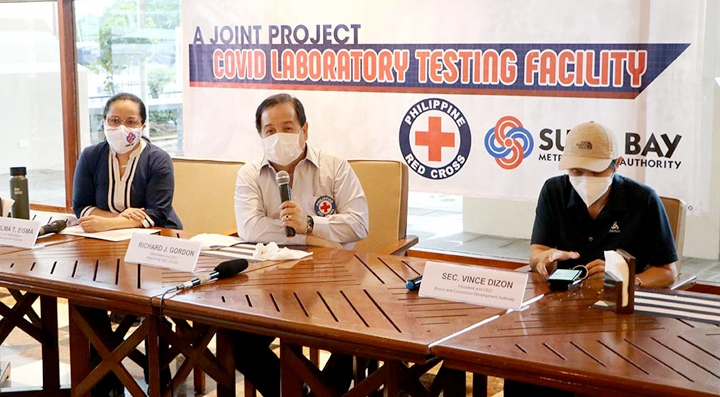
Administrator Wilma T. Eisma and BCDA President and CEO Vince Dizon.
With ample and capable manpower in place, PRC’s modernization and expansion program beefed up its logistics so as to deliver more services on time, with the support of information technology. The organization invested heavily in rolling assets to improve further its response capabilities. Currently, it has a fleet of 178 ambulances, 38 food trucks, rescue trucks, fire trucks, Humvees, amphibious vehicles, rubber boats, wing vans, water tankers with water bladders, and payloaders to clear debris after calamities. Given the country’s archipelagic setup, a humanitarian ship called the MV Amazing Grace was acquired as another crucial asset in its rescue and relief operations on various islands.
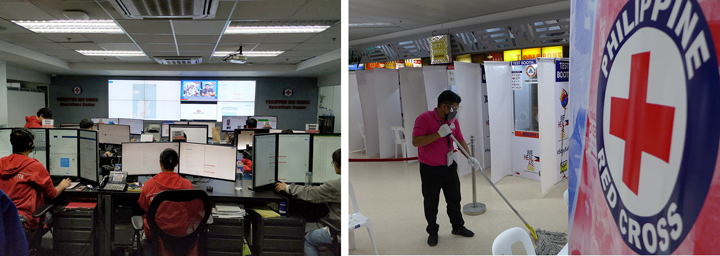
At the core of fulfilling its tasks is the PRC’s Operations Center or “OpCen,” which serves as the command hub linked to all its chapters all over the country. This state-of-the-art center allows the organization to respond immediately to any emergency, providing a coordinated action that optimizes the impact of volunteers and logistics.
“That’s why our slogan is, ‘Volunteers + Logistics + Information Technology = A Red Cross that is always first, always ready, and always there,’” the PRC chief said. “We want to be the lifeline of the country. We want to be the partner of choice of different partners.”
Beyond expertise
BOLD and brave, the PRC always steps out of its way to take responsibilities beyond its known competence.
Prior to Covid-19, Gordon already had predicted a few years back that this could happen after reading the book, The Great Influenza, by John M. Barry that examines the Spanish flu, one of the worst pandemics in world history that occurred from 1918 to 1920.
Then came the latter part of 2019, when the coronavirus outbreak unfolded in China and started to become a pandemic early 2020. As soon as the lockdown was imposed in Metro Manila and some parts of the country with increasing cases of infections mid-March of that year, PRC was one of the leading organizations to respond to this health crisis.
“That is not our skills set. We’re in blood. But still we put up 100 tents all over the country,” he said of the fully equipped isolation facilities they built in hospitals and some schools to accommodate the rising number of patients that were not admitted to hospitals due to lack of beds.
The organization, likewise, blazed the trail to build the first molecular laboratory for testing in the country, which earned praise from government officials who visited the facility. Such testing lab now counts at 14 spread across the nation—each costing around P25 million. Apart from swabbing, it also pioneered saliva testing.
“From the very start, we were representing about 65 percent to 70 percent of the testing,” the PRC chairman and CEO shared, while citing their leadership in terms of output: conducting 5,692,158 tests out of the total of 34,876,958 nationwide as of April 11.
Red Cross in the Philippines, with its compassion and benevolence, is not only at the forefront of responding to Filipinos during times of tragedies, but also extends a helping hand even to foreign lands. Since 2005, PRC has become a donor society by giving monetary assistance to various countries confronted with various calamities. The latest of which were Turkey and Syria, which were jolted by a 7.8-magnitude earthquake on February 6—each receiving $100,000.
“This only shows that we also became a donor country,” Gordon stressed. “So a lot of things were done by the Red Cross.”
With this visionary leader at the helm of PRC, this humanitarian organization could well continue to become the torch bearer of heroism and kindness for every Juan.
Image credits: AP/David Guttenfelder, Philippine Red Cross via AP, Bernard Testa, Philippine Red Cross and Nonie Reyes, Henry Empeño