
ONE of the most common problems of people who need to go out every day is “maskne” or mask acne.
Maskne is not just acne but skin irritation such as redness, bumpiness and irritation that appear in areas of the face the mask touches.
Now that it’s summer, expect the maskne problem to become worse. Sweat that sits on your face and mixes with everything that’s on there is a sure recipe for acne disaster.
Here are some ways to deal with this problem.
Dr. Kaycee Reyes of Luminisce Holistic Skin Innovations said maskne is probably caused not just by pressure from the mask but also by stress and sweat. She suggests using a water-based moisturizer and an oil-free sunscreen.
- Try: Nivea Sun UV Face Cream Anti-Age and Pigments. Spot treat acne with a salicylic acid product. Salicylic acid is beta hydroxy acid that helps clear acne by exfoliating skin. I also love using acne patches. My friend Julie got some for me in Korea and while I looked at them initially as something that would prevent acne, I now see them as best used for protective purposes. Use these patches (which normally come in different sizes) on spots where you’re often hit by maskne. Mine is the right cheek area. I usually apply three patches there.
- Try: In Her Element Masknegel and Happy Skin Beauty Invisible Pimple Patch. Always keep your makeup, skin-care products and beauty tools like makeup brushes clean and sanitized. In August 2020, I purchased a UV Care Pocket Sterilizer so that I could sanitize my makeup before storing them for future use. This was me thinking that quarantine would only last for a few months. It was probably one of the best beauty investments I made in quarantine. I now use it regularly on products that I’ve already opened, especially creams and serums.
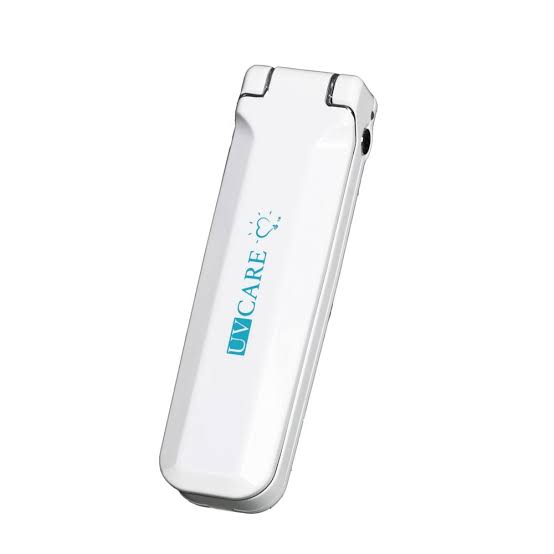
I also use it after deep cleaning and drying my makeup brushes. UV Care devices work using ultraviolet light, which represents a portion of the sun’s electromagnetic spectrum. The devices “clean and sterilize objects and surfaces without the use of chemicals; kill up to 99.9% of harmful bacteria, viruses, germs, allergens as well as mold, dust mites, fleas, bed bugs and their eggs; and are laboratory tested and approved by doctors.” I’m actually eyeing the UV Care Multipurpose Sterilizer Lite 1, which I can also use to sanitize items that have been in my bag for grocery runs.
- Try: UV Care Portable Germ Zapper. Always double-cleanse. When we wear sunscreen and other skin-care products during the day, we need to double-cleanse to remove all products from our skin. I double-cleanse with an oil followed by a foaming cleanser. Sometimes, it’s micellar water and a foaming cleanser, but mostly I use an oil cleanser these days.
- Try: Hada Labo Cleansing Oil and Hada Labo Deep Clean and Pore Refining Face Wash. Also, Skip the makeup. I cannot believe I said this because at the start of quarantine, I was the person who wore makeup even under a mask. I don’t anymore because I have oily and acne-prone skin. In a hot and humid environment (your skin under that mask and face shield), bacteria that causes acne will thrive. But if you must wear makeup, choose powder products or a foundation that’s nearly mask-proof. I used the word “nearly” because completely mask-proof makeup, in my humble opinion, does not exist yet. Hopefully, one will be invented this year.
- Try: Estee Lauder Double Wear Stay-in-Place Makeup. Just make sure everything that touches your face is clean and this isn’t just for pandemic-related reasons. Covid-19 is serious and potentially life-threatening but it’s not the only pathogen that can harm your skin.
Let’s admit it: Makeup is potentially a breeding area for viruses and bacteria. Double-dipping into cream and liquid products with brushes, unknowingly sneezing when makeup is open on a table and not washing sponges after every use are only some of the situations in which viruses, bacteria and even fungi can transfer from a person’s skin onto makeup and skin-care products.
Washing your hands with soap and water for 20 seconds before handling makeup is the best way to avoid contaminating them. It’s not difficult if you’re the only person handling your makeup. But if you’re a makeup artist, imagine the care that’s supposed to go into sanitizing products and tools before and after every use. It’s not just for you but for your clients’ peace of mind.
On Instagram, I’ve seen makeup artists taking the extra step by using UVGI (ultraviolet germicidal irradiation) on their makeup and tools.
So I asked makeup artists why they used such devices.
“Many clients now insist on it, or at least ask if you have any of these devices. I have one client who even gave me a small handheld one before the shoot,” said a makeup artist.
Jigs Mayuga uses a UV sterilizer from a Korean brand called Upang for his brushes after he has washed and dried them. The brand UV Care seems to be a popular choice among makeup artists, maybe because it’s been around even pre-quarantine. Also, hospitals, institutions and establishments have used it even pre-pandemic. The brand also has air purifiers, portable sterilizers, surface and room sterilizers, escalator handrail sterilizers and other products and solutions that are effective in different settings for killing microorganisms and bacteria.
I’ll be honest, if I was having my makeup done by someone right now, I would also subtly ask them if they used a UVGI device. Of course, I will not be having my makeup done by anyone else anytime soon.
Meanwhile, try to double mask if you can. The new Covid-19 cases are in record numbers. Stay at home if you have the luxury of doing so. I always say, let’s leave the streets to those who need to be out for work or other urgent reasons.