
Despite the health and economic crises brought about by Covid-19, which have disrupted food systems, the Department of Agriculture (DA) has expressed confidence that the Philippines can meet the Sustainable Development Goals (SDGs) by 2030.
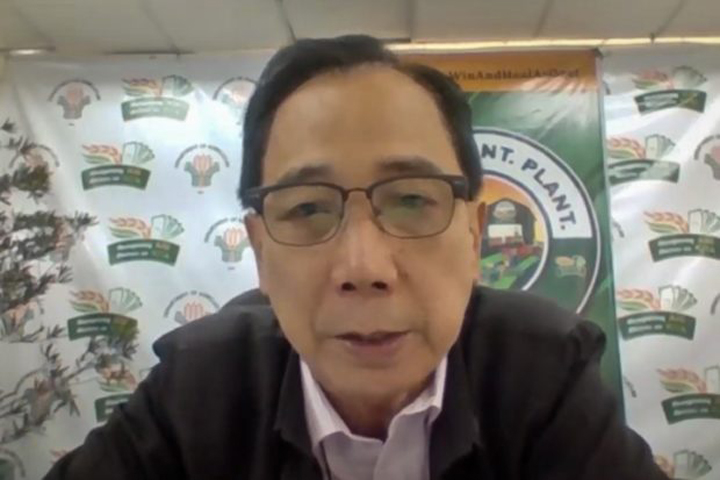
During the opening of the two-day National Dialogue for Food Systems last July 12, Agriculture Secretary William D. Dar said a “whole-of-nation approach” is key to achieving the SDGs.
“Our national strategies have already been laid out to attain a food- and nutrition-secure Philippines, but this could be successfully done if there is unity among the people, and if all actors—both state and non-state—will agree with it,” Dar said.
“Rather than looking at it from a ‘whole-of-government approach,’ we would prefer that this task is seen as a whole-of-nation approach.”
He said the DA is also adopting a “new thinking for agriculture” to change mindset and introduce “durable approaches.”
These approaches include farm consolidation to promote economies of scale, increasing youth participation in agriculture, facilitating adoption of new and modern technologies, enhancing climate-smart and promoting digital agriculture, encouraging more investments in provincial agriculture and fisheries, and updating commodity industry road maps.
Meanwhile, Dar said the two-day National Dialogue for Food Systems seeks to address the five action tracks that will be tackled during the United Nations Food System Summit (UNFSS).
He said the Philippine dialogue will form the basis for the country’s renewed commitment when the United Nations conducts the UNFSS in New York, in September this year, on the sidelines of the annual UN General Assembly.
Moreover, Dar said the five action tracks that will be tackled in the September summit include: ensuring access to safe and nutritious food for all; shifting to sustainable consumption patterns; boosting nature-positive production; Advancing equitable livelihoods; and building resilience to vulnerabilities, shocks and stress.
The UN forecast that from the current 109 million, the population of the Philippines will reach 126 million by 2030 and about 142 million by 2040, posing a challenge to both the government and the private sector to design “a workable pathway” that will ensure food security for its people while safeguarding the environment for future generations.
“This pandemic has shown the fragility and inequalities of our food systems and underscored the urgency to make more sustainable, inclusive, and resilient. We must act collectively in order to face these challenges head on,” said Dar, who has been designated as the country’s National Convenor for the UNFSS.
The UNFSS is part of the decade of action to achieve the SDGs by 2030.
According to Dar, the action tracks came as a result of year-long consultations and dialogues that the DA conducted with various stakeholders and prescriptive interventions that have been identified and put into place.
The DA said these five action tracks offer stakeholders from a wide range of backgrounds a space to share and learn, with a view to fostering new actions and partnerships and amplifying existing initiatives to address global poverty and hunger, as well as protection of natural resources.
The agency said each action track is designed to address possible trade-offs with other tracks, and to identify solutions that can deliver wide-reaching benefits.