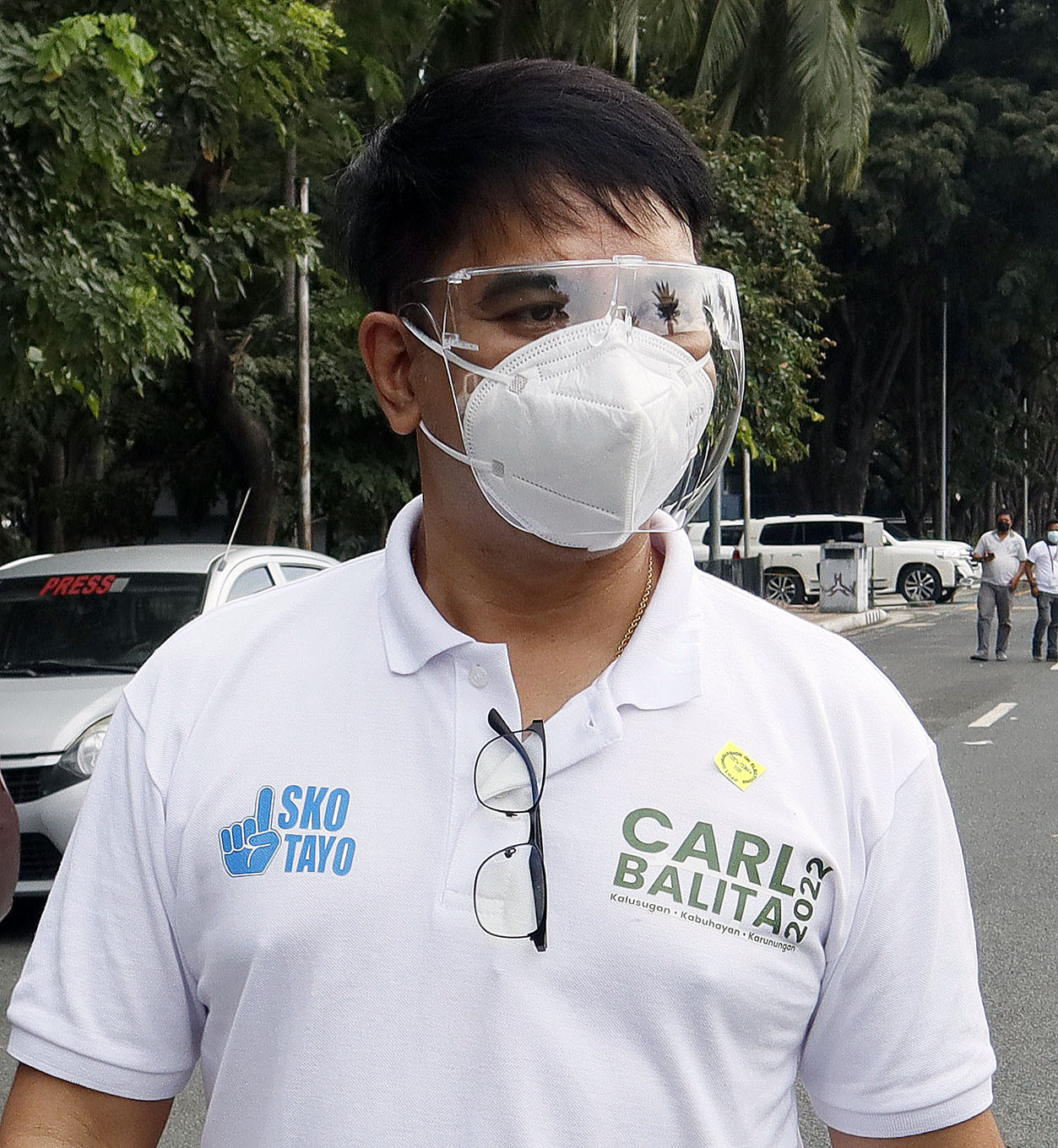

THE acute manpower shortage from the stepped-up recruitment by richer countries of Filipino health-care workers is being compounded by the utter neglect of the rest of the medical frontliners who remain underpaid, overworked, and uncovered by government interventions in the pandemic, senatorial candidate Dr. Carl E. Balita said in an online forum with them.
Balita, a registered nurse and midwife, heard the complaints of, among others, nursing attendants, barangay health workers and even private company nurses who are daily exposed to Covid-19 but are under the radar of policy-makers and health authorities, often forced to pay for their treatment and confinement when they get infected.
As Balita listened to the country’s unsung and underpaid heroes, nurse Amalia Erum gave a brief account of the sad reality that happens in the Covid-19 battlefield, especially in the coverage of the special risk allowance (SRA), which Congress mandated under the Bayanihan laws for medical frontliners.
“The SRA release is a mess. If you’re not on duty in the ER, triage, or Covid ward, and you’re not an encoder or OPD nurse, you don’t have SRA. But how about the patients who get admitted in the non-Covid ward, then test positive, and afterwards gets transferred to the Covid ward. This isn’t counted but the nurses there who were not included for SRA are still very much exposed,” Erum said, partly in Filipino, by way of explaining how authorities have overlooked the complications of the frontline situation.
Per Administrative Order 36 (AO 36), the SRA is given to public and private health-workers assigned in designated Covid-19 units in hospitals or are in direct contact with Covid-19 patients. Lawmakers, including Blue Ribbon Chairman Sen. Richard J. Gordon, have recently been pushing for the coverage of all hospital workers, on the premise that all of them are vulnerable to Covid infection.
In the forum with Balita, several other nurses aired similar grievances:
“This is so real! SRA release is unfair!” wrote Charlyn Brigitte Juan in all capital letters.
“‘Thank you’ is all they can say. If you contract Covid-19 because of handling patients, they’ll even think you didn’t get it from the hospital,” commented another worker, Ghie Anne.
Besides the seemingly unfair release of SRA, nurses also revealed how difficult the processing can be for those who are already qualified to receive it, and even those who already contracted Covid-19 while on duty.
“If you’re not in the Covid ward, you’d have to justify. If you contracted Covid, they still ask for an explanation before you receive your hazard pay. You’re already haggard but still not receiving anything,” said Kate Quiambao Hernandez.
Earlier, an ambulance driver interviewed by the BusinessMirror revealed that they, too, are not covered by the special allowances given during the pandemic, despite their long exposure to infected patients.
“Please include us barangay health workers,” Fiona Jean Lopez Lorenzo pleaded with Balita. “It’s very depressing, the exhaustion and difficulty we put up with ever since the Covid-19 pandemic started. We go on duty in the frontlines, in Covid-19 facilities. We even monitor those who are quarantined at home but it’s as if we are not seen by the authorities. We don’t receive much from our honoraria, it’s not even enough to support our families. We’re not even provided PPEs [personal protective equipment].”
Others shared the plight of private company nurses and nursing attendants.
“Private company nurses who are handling almost 800 employees and more and are also in close contact with positive cases have not received SRA and Hazard Pay since day one of the pandemic. They also render 12-16 hours of duty and are also pleading for additional compensation,” said Yrys Ramos Daiz.
“Sir Carl, hoping that you can also notice the salary of nursing attendants. Most of them are under boards for nursing and midwifery. Their workload is also immense. I came from there and I can attest to the exhaustion and volume of workload during duty hours,” commented Olga Enrile Ariola Shanthos.
Jaysa Aranas, for her part, said, “I am still hoping [that] someone will [take] action for [these] issues not only by words.”
Carl Balita is a registered nurse and midwife, who for years has been in the forefront of campaign, rallies and representations for the nurses. His senatorial bid is inspired by the health situation where he believes he can contribute to resolve. “We never had a nurse-midwife in the Senate, and we need to represent this largest health human resource sector, if we want a more efficient health care service for our people,” Balita asserted. “We cannot speak of development and economics without health,” he says.
Earlier, Balita warned of the impending health human resource crisis brought about by the massive recruitment for Filipino nurses to work overseas. He also is bridging the dialogue related to the recent ban in the deployment of nurses by the POEA after reaching the 5,000 annual cap.
Image courtesy of roy domingo