

FOR the past few years, images taken from space by Europe’s satellites were shared with the Philippine government to manage the impact of disasters such as typhoons, the eruption of Taal Volcano and recently, the oil spill in Mindoro.
The European Union offered the Philippine government access to more of their space data images by building a national Copernicus data center in the country.
The Philippines, considered as one of the countries most vulnerable to climate change, agreed to take on the offer and became the first in Southeast Asia to partner with the EU on a space program.
On Monday (April 24), the EU Mission in Manila officially announced and launched a landmark space deal called the Copernicus Capacity Support Action Programme for the Philippines (CopPhil).
Under the deal, the Philippines can access EU’s data gathered by its satellites from its Earth’s Observation Program called Copernicus.
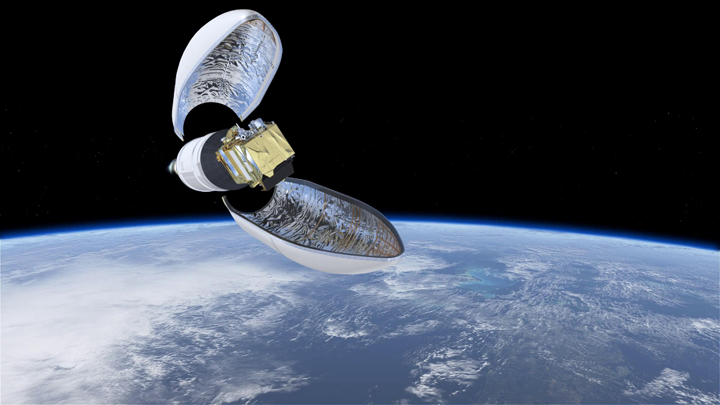
A wealth of environment and climate data derived from a constellation of Copernicus satellites—the Sentinels—will be made available to Philippine authorities. The Sentinels monitor the Earth and its many ecosystems 24 hours daily.
A Copernicus national mirror site will be established for the Philippine government. A centralized Copernicus data storage and processing center (essentially a high-performance server) will be built at the Philippine Space Agency. Multiple government agencies will be linked via dedicated high speed links for fast data download and processing.
“With this new Copernicus center, the Philippine authorities will be better equipped to help people respond to natural disasters and climate change.
As always, we make the data available for all actors and scientific use,” European Commissioner for International Partnerships Jutta Urpilainen said.
Aside from PhilSA, the Department of Science and Technology is also a partner of the EU in this program.
“The new Copernicus data center site will enhance the response capability and with that the resilience of the Philippines to natural and man-made disasters through the strategic use of space data,” the EU said.
CopPhil is the first space cooperation program in Southeast Asia.
EU funded the European Space Agency to kickstart the space program, worth P610 million or €10 million.
Here are the potential uses of Sentinel data:
1. Detect and monitor potential hazards such as landslides and volcanic eruption
2. Assess the extent and severity of disasters to help local officials on their emergency response.
3. Map high-risk areas for flooding and help government prioritize infrastructure projects such as building of seawalls or reinforcing riverbanks
4. Land cover mapping
5. Ground motion monitoring
6. Detection of marine litter
7. Urban air pollution
8. Flood cover detection
9. Crop development monitoring
10. Developing Philippine National Spatial Data Infrastructure
Science and Technology Secretary Renato Solidum and PhilSA Director General Joel Marciano Jr. welcomed the launch of CopPhil.
“CopPhil will develop and leverage our own Space Science and Technology applications to strengthen the nation’s resilience to disasters and climate change,” Solidum said.
For his part, Marciano said this partnership with the European Union is significant as it “strengthens the domestic space value chain, particularly the ability to process and use satellite images and spaceborne data to better manage, and protect our environment and natural resources, and be better prepared in the face of disasters and climate change.”
Luc Véron, European Union Ambassador to the Philippines, said CopPhil is a “pioneer initiative in Asia and Asia Pacific and a starting point for a larger programme on Digital Connectivity.”
“In the long term the European Union is exploring the possibility to create a network of Copernicus partners in the ASEAN region aside from other parts of the world. The uptake of innovative technologies such as Copernicus will trigger growth, jobs and modernisation of digital infrastructures that can be used in many sectors in the Philippines,” Ambassador Véron said.
European public sector and space agencies from Austria, Italy, Greece, Spain, Germany, France and Romania, and from the European Space Agency also attended the launch.
Image credits: The Delegation of the EU to the Phils