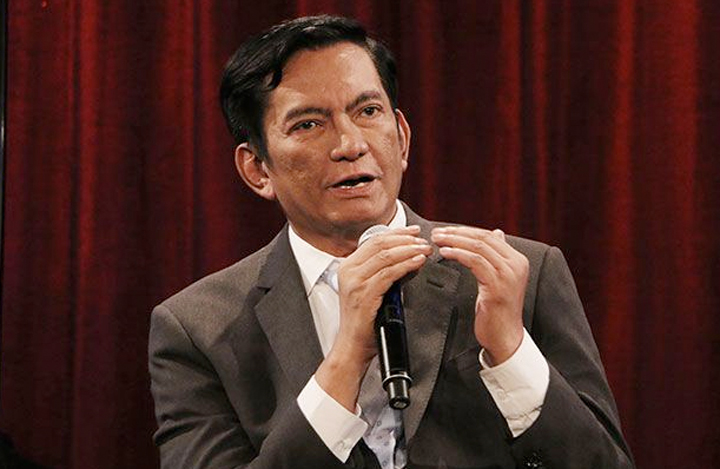
THE chairman of the House Committee on Ways and Means last Tuesday proposed to direct tariff revenues from current tariff rates towards biosecurity and investments in safe feeding of the country’s livestock.
Albay Rep. Joey Sarte Salceda said the African swine fever (ASF) was spread in large part of the country because of swill feeding or leftover human food and infected imported meat passing through Philippine borders.
“We need to invest in biosecure import inspection, sanitation of our swine farms and better feeding,” Salceda said. He added his policy team is calculating the hypothetical foregone revenue and he will propose “that these revenues be dedicated to these efforts instead.”
“[During our committee hearing] It was also made clear to us that the process for inspecting imported meat is not yet strong enough to protect the country from biohazards, including new strains of ASF.”
He added that the officials of the Department of Agriculture “themselves manifested that the process needs improvement.”
Salceda’s ways and means committee covers all matters directly and principally relating to the fiscal, monetary and financial affairs of the national government including tariff, taxation, revenues, borrowing, credit and bonded indebtedness.
“As changes in tariff rates fall under the Committee on Ways and Means, my committee stands prepared to do what is necessary to chart a course that both protects domestic industry and benefits Filipino consumers,” the lawmaker said. “I already recommended that we instead allocate the tariff revenues for biosafety and feeding of our swine population.”
Retain tariff rate
MEANWHILE, Salceda also wants the government to retain the existing 40-percent tariff, saying lowering tariffs without stronger inspection mechanisms carries the risk of increasing ASF infections among domestic livestock.
“I warn against a knee-jerk tendency to lower imports for pork. Imported pork prices are already low, at around P190 per kilo, even with the current tariff rates,” he said.
“Lowering the tariffs further down will only harm revenues and the domestic industry, while padding the profits of traders and importers. With or without lower tariffs, there is a high commercial incentive to import because of the price differential,” he said.
The Committee on Tariff and Related Matters (CTRM) has proposed to immediately lower pork tariffs to 5 percent within the Minimum Access Volume (MAV) and 15 percent outside the MAV for three months, with a slight increase to 10 percent within the MAV and 20 percent outside the MAV for nine months. These rates are significantly lower than the current 30 percent within the MAV and 40 percent outside the MAV.
But the leadership of the lower chamber has asked President Rodrigo Duterte to reconsider his recommendation increasing the MAV for pork by 350,000 metric tons (MT) and retain the existing tariff rate.
Salceda, however, said he is supporting the move to increase the MAV.
“I am supportive of efforts to increase the MAV for pork imports and to rationalize our import procedures. We almost always import above the MAV, but the MAV itself is not fully utilized,” he said. “Last month, my committee already held hearings on the matter, and we continue to work on policy solutions to help lower pork prices.”
“While our imports always exceed the MAV, the MAV itself is underutilized due to red tape in the process of applying for the MAV. Industry players claim that other players corner MAV approvals. While this claim may or may not be true, we are certain that merely expanding the existing system will only result in expanding its current flaws The proposed rate differential (in-quota 5 percent and out-quota 15 percent) is extremely attractive to those who would attempt to corner MAV allocations,” he added.
Last March 26, the Palace submitted a letter to the House of Representatives recommending the increase in the MAV for pork by 350,000 MT. The current MAV is only at 54,000 MT.
“I propose instead that we expand the MAV, but make its approval automatic for importers (first-come, first-served). This makes the process fair and efficient, and would effectively lower tariffs by 10 percent to the extent that we need additional imports. Lowering tariffs beyond the volumes we need is tantamount to a bonanza for importers and a bane for already-struggling domestic producers,” he said.