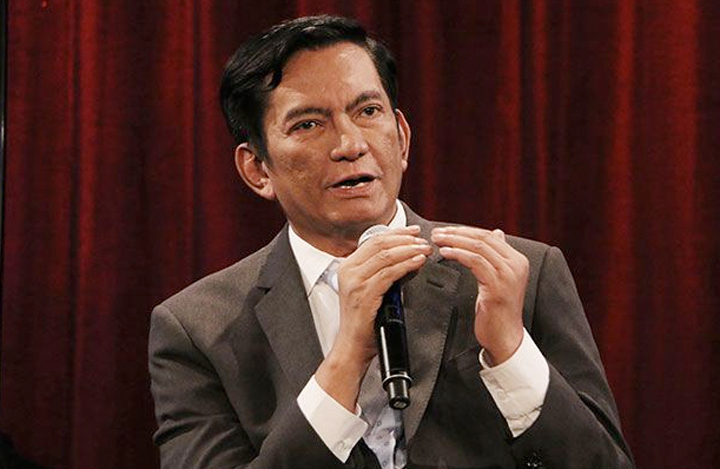
THE chairman of the House Committee on Ways and Means on Monday said the declining primary deficit for 2021 from 2020 could be “a plus for our credit outlook recovery next year.”
During the hearing on debt management bills, House Committee on Ways and Means Chairman Joey Sarte Salceda said the economic managers are managing the country’s debt carefully.“Our credit ratings will likely be sustained, and credit outlook may improve in 2022 as our country’s primary deficit is improving, albeit still at elevated levels,” Salceda said.
“If you are growing faster than you are borrowing, and you use the borrowing to grow, that’s good debt. If you are a country hungry for capital like the Philippines, fear of debt is worse than debt itself,” he added.
Primary surplus or deficit is the government’s deficit minus interest payments. It is typically used as a measure of the country’s capacity to service its debts.
With tax collections beginning to recover as well, the lawmaker said there is momentum for fiscal recovery.
“I think we will not suffer a credit rating downgrade, given our clear demonstration of political will to keep the debt controlled,” Salceda said.
For next year, the debt burden amounts to P541.3 billion, accounting for 10.8 percent of the 2022 National Expenditure Program and is lower by 3.4 percent year-on-year.
“Our debts are generally justified. We are heavily investing in infrastructure and in the vaccines, which are in a sense human infrastructure, because without the vaccines we cannot move around under Covid-19,” Salceda added.
“As a rule of thumb, first your interest rate has to be smaller than your GDP growth rate, and we meet that condition. Second, your foreign currency risks have to be minimal, and at around just 30 percent of debt being in foreign currency, our risks are very minimal,” he said.
Salceda also noted that the interest rate of national government debt is also declining.
“All in all, I think our fiscal managers are managing the situation exceptionally well, considering the circumstances of Covid-19, where all countries had to borrow big,” Salceda said.
Infra, social spending
During his presentation, Finance Secretary Carlos Dominguez said the debts were designed to fund massive investments for the Filipino people under the Duterte administration.
“The sustainability of the debt depends on two things: the cost and the ability to generate economic activity to pay it off,” Dominguez said.
Dominguez noted that Average Annual Infrastructure Spending Per Administration nearly doubled to 4.9 percent of GDP under President Duterte, from 2.5 percent in the previous administration, and even lower rates under past administrations.
Average Annual Social Services Spending Per Administration under President Duterte, at 6.9 percent of GDP, was also at its highest since the Ramos Presidency.
“If we did not increase the level of public spending through borrowings, the domestic economy could have collapsed,” he said.
“We should use our borrowings to beef up our health requirements and to generate productive economic activity. If we don’t do these things, the economy will collapse further,” he added
In the same meeting, the panel approved House Bill No. 7963, creating mechanisms for effective Official Development Assistance (ODA) use.
Official Development Assistance is an indicator of international debt flow to the country.
Salceda said he supported the measure as “the institutionalization of the Paris Declaration on aid effectiveness” in the Philippines.
The Paris Declaration of 2005 “gives a series of specific implementation measures and establishes a monitoring system to assess progress and ensure that donors and recipients hold each other accountable for their commitments.”