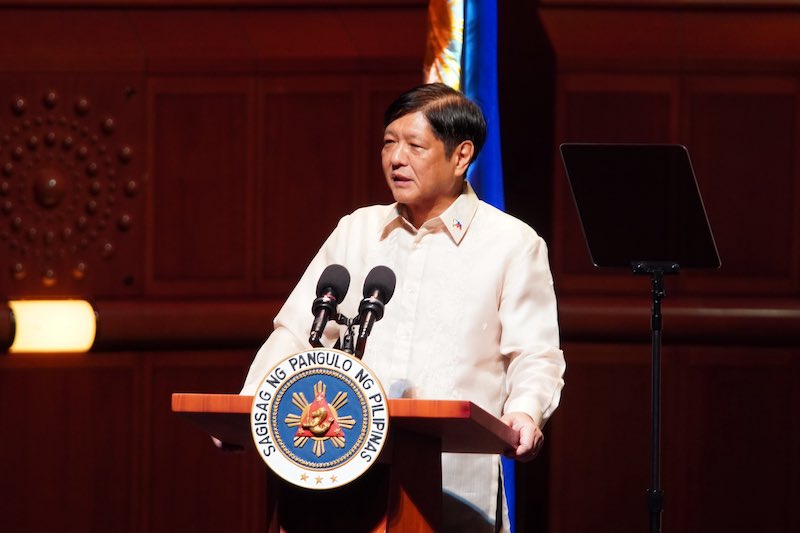
President Ferdinand “Bongbong” R. Marcos, Jr. has made the country more open to “constructive” engagement with international bodies to address reports of local human rights violations, according to the Department of Foreign Affairs (DFA).
“The administration of President Marcos has made very clear pronouncements about the seriousness of his government in terms of human rights obligations,” Daza said. “It has taken a very open and constructive approach to the issue of human rights,” DFA spokesperson Teresita Daza said.
She made the remark after the United Nations Human Rights Council (UNHRC) issued a statement last week expressing its concern on “reports of grave human rights violations” in the country’s war against illegal drugs.
She noted no less than Justice Jesus Crispin C. Remulla participated in the UNHRC meeting last month to update it of the government’s efforts to boost local human rights protection.
“This is to stress that contrary to what has been mentioned about the culture of impunity [in the report], I think there has been a shift in terms of how the issue of illegal drugs is actually being addressed,” Daza said.
Among the issues, which were flagged by UNHRC in its press statement were the “extremely high number of extrajudicial killings” in the government’s campaign against illegal drugs, overcrowding in prisons, and long pre-trial detention of former Senator Leila de Lima.
During the administration of former President Rodrigo R. Duterte, the government refused to cooperate with the International Criminal Court (ICC) to investigate the estimated over 6,000 killings in the government’s war against illegal drugs.
Image credits: Troi Santos