
THE surge in Covid-19 cases in many of the country’s trade partners and the ongoing container crisis may have caused the slowdown in the country’s export growth, according to local economists.
On Thursday, the Philippine Statistics Authority (PSA) reported that the country’s export growth slowed to 12.7 percent in July, the lowest in seven months. (See: https://businessmirror.com.ph/2021/09/09/phl-exports-grow-12-7-in-july-in-3rd-consecutive-month-performance-slowed/)
Exports growth is the slowest since February 2021 when exports contracted 1.4 percent. The country’s export earnings this year peaked at 74.1 percent in April.
“One reason could be the momentary closure of one of China’s major port because of Covid,” UnionBank Chief Economist Ruben Carlo O. Asuncion told the BusinessMirror. “Countries around us were having challenges already because of [the] Delta variant.”
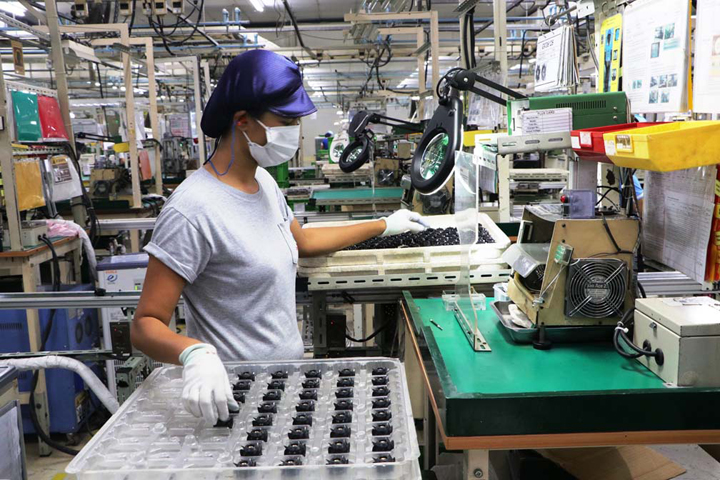
Apart from the Delta variant, Asuncion said it is also possible that the chip shortage being experienced in the auto and electronic consumer goods also affected the country’s performance.
PSA data showed that exports of automotive electronics contracted 52.7 percent in July 2021, the second lowest performance among commodity groups. The lowest was sugar which contracted 77.9 percent in July 2021.
BPI Chief Economist Emilio S. Neri Jr. said the bottlenecks in the supply chain here and abroad may have also tempered export growth.
He said these bottlenecks may have also caused the country’s exporters to run short of raw materials, thereby cutting down their shipments to various parts of the world.
“Materials will continue to come in and will probably keep exports strong but flow may be intermittent even through mid-2022,” Neri told the BusinessMirror.
Former Dean of the University of the Philippines School of Economics Ramon L. Clarete agreed, and said the demand for certain commodities may still be down given the current situation.
He added that the recent growth of exports in the March -to-June period may have also been caused by low base effects, given that the government closed 70 percent of the economy last year to contain the spread of Covid-19.
April last year saw the steepest decline in export performance at a contraction of 41.3 percent followed by May, which contracted 26.7 percent; June, a decline of 10.1 percent. After peaking in April 2021, export earnings slowed to a growth of 30.8 percent in May and 18.8 percent in June.
“The world demand is not vibrant as well. [But I also] think they’re coming from a very low base,” Clarete told the BusinessMirror.
Meanwhile, J.P. Morgan’s Nur Raisah Rasid said in a statement that seasonally adjusted data showed exports fell 2.2 percent month on month while imports declined 6.4 per month on month.
PSA data showed imports posted growth of 24 percent in July 2021, slower than the 43.4-percent growth in June 2021 but faster than the decline of 20.8 percent in July 2020.
Import growth peaked in April 2021 with growth of 153.1 percent. After this, import growth slowed to 55.8 percent in May; 43.4 percent in June; and 24 percent in July.
“The faster-than-expected widening of the trade deficit over recent months reflects a broad-based imports upturn and a stall in exports. The imports rise in part reflects price effects from the broad upturn in global commodity prices,” Rasid said.
“Against a backdrop of firm commodity prices and a gradual economic reopening, we expect overall imports to trend higher in the coming quarter, raising US$ demand,” he added.
Image courtesy of Henry Empeño