
President Duterte may have failed to deliver on his promises to end crime, corruption, and illegal drugs, according to a study released by the Ateneo de Manila University (ADMU).
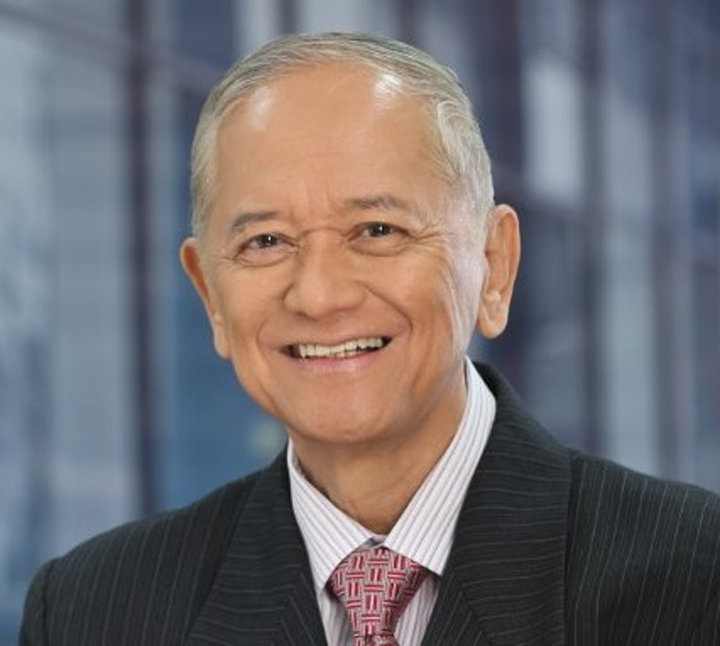
In an Ateneo School of Government (ASOG) working paper, titled “National Security, Anti-Corruption, and Anti-Crime Policies in the Duterte Administration,” former Education Secretary Edilberto de Jesus said the President fell short of his campaign promises because he approached these issues as mainly law-enforcement problems.
Moreover, de Jesus pointed out in a separate interview with ASOG that the administration also “seriously underestimated” the difficulty of achieving the promises and pursued policies and practices that made it more difficult to accomplish.
“Fortunately, I do not have to make the assessment myself. President Duterte has accepted the fact that he has not done very well in this area. He has admitted that he is not going to be able to fulfill his promises,” de Jesus said.
“There was a tendency to overestimate the capacity of the government to achieve his [Duterte’s] promises and to underestimate the challenges that he would have to overcome in order to make good on his promises,” de Jesus added.
For instance, de Jesus said, the President “overestimated, exaggerated, hyped up” the scale and gravity of the drug problem in the country.
“Strategies that could be effective to control drugs within a city were difficult to implement on a national basis,” de Jesus said.
Despite lessons of failure of the war on drugs strategy in other countries like Mexico, Colombia and Thailand, he said, President Duterte pushed through with it and even continued to pursue this approach even after admitting that it had failed.
“It was a winning campaign move. Ang kasamaang palad naman, iyong policy ay napatunayang hindi angkop doon sa problema ng droga. So, our problem is that, the government took drugs as mainly a law-enforcement issue, when the experts are telling us that this is also a public health issue and an economic issue,” de Jesus said.
In 2018, the President noted that the problem of drugs would not end during his term. A year later, he said his policemen are at the brink of surrendering.
On top of this, “weaknesses” in the Philippine National Police (PNP) have been exposed as issues of abuse and corruption prompted more responsible leaders in the PNP to call for more reforms in the organization and a recalibration of anti-drugs campaign.
He also argued that the Duterte administration also failed to sustain its rankings in the country’s corruption perception, ease of doing business and global competitiveness.
The presidential approach taken by Duterte “weakened proven guard-rails against corruption,” de Jesus said, adding that like previous presidents, the Chief Executive from Davao City appointed government officials within his KKK or Kamag-anak, Kaklase, Ka-probinsya.
De Jesus also claimed that “no investigation or charges followed from the sacking” of officials and many were recycled and reappointed to other positions in government.
Instead of fostering transparency, President Duterte “restored secrecy in government” by refusing to disclose his Statements of Assets, Liabilities, and Net Worth (SALN), he said.
“The [Duterte] family’s SALN for 2018 and subsequent years have not been disclosed, despite Freedom of Information requests for their release…. New rules issued by [Ombudsman] Martires in September 2020 made SALN requests for ‘life-style checks’ subject to the approval of an Ombudsman lawyer-evaluator. The new rules appeared designed to shroud rather than unveil official SALN records,” he said.
Despite the issuance of Executive Order 2 or the Freedom of Information Order, de Jesus said that the early attempt to push for greater freedom of information in government appeared to be a case of ningas kugon.
On the territorial dispute in the West Philippine Sea (WPS), de Jesus said it was not among the campaign promises of the President but the public still expected him to defend the country from China after stating in a debate that he would.
“But the Arbitral Award, almost universally acclaimed by the electorate, was won by the Aquino government and the opposition campaign understandably wanted to avoid giving attention to an issue that favored the administration and, therefore, its chosen candidate,” de Jesus said.
He then lamented the government’s lack of strategy in addressing the national security issue in the WPS and that the government’s pandemic response further complicates the issue.
“The Philippines’ vaccine strategy reliant on supplies from the People’s Republic of China raises concerns about the country’s security in the West Philippine Sea. This is heightened by China’s repeated violations of the Philippines’ Exclusive Economic ZONE,” he said.