
DISCARDING food waste could also mean throwing away the economic opportunities possible when these are put to better use, according to an expert from the Asian Development Bank Institute (ADBI).
In an Asian Development Blog, ADBI Capacity Building and Training Associate Derek Hondo said food waste such as corn cobs, edamame pods, beetroot skins, sugarcane and potato skins can be processed into alternatives to plastic.
Other uses of food waste, Hondo added, include energy recapture through anaerobic digestion or methane fermentation. The biogas that can be generated can lower reliance on fossil fuels and reduce greenhouse gas emissions.
“Creating loops for the food system instead of disposing of discarded food is a type of circular economy that can decrease the strain on agricultural resources. Unused food and food waste can be recycled for other purposes,” Hondo said.
Citing data from the Food and Agriculture Organization (FAO), Hondo said up to 11 kilograms of food per capita in Asian developing countries and 80 kilograms of food per capita in developed countries are wasted.
There are also studies that estimate that 1.3 billion tons of food are lost annually around the world, he said. However, due to the lack of data in many countries, it was difficult to measure the extent of the problem.
This compounds other challenges in food systems worldwide. Hondo said these challenges include near-capacity landfill sites, food insecurity, and environmental degradation.
“Governments must recognize that achieving a sustainable economy will require innovation to transition to a circular economy, which, in the context of food usage, seeks to reduce the amount of wastage,” Hondo said.
Creating food loops means transitioning to a circular economy which would greatly reduce waste while also addressing several of the Sustainable Development Goals (SDGs).
These SDGs include Goal 11 on sustainable cities and communities; Goal 12 on responsible consumption and production; and Goal 13 on climate action.
Earlier, in a Policy Brief titled Urban Food Systems and the Pandemic, the UN Food and Agriculture Organization (FAO), United Nations Development Programme (UNDP), World Food Programme, and the International Fund for Agricultural Development found issues and gaps in food systems in Metro Manila, especially at the height of the lockdowns.
These issues also included food supply bottlenecks especially at the start of the lockdown last year; information gaps within the food system which bared ineffective ICT systems; and capacity gaps in food provisioning.
The report said efforts to address these losses also mean avoiding food waste in households and adopting measures to mitigate food losses in the country’s food supply chain.
However, as to the magnitude of the losses, FAO Representative Kati Tanninen said in a briefing on Thursday that there is no baseline created to measure food loss in the country.
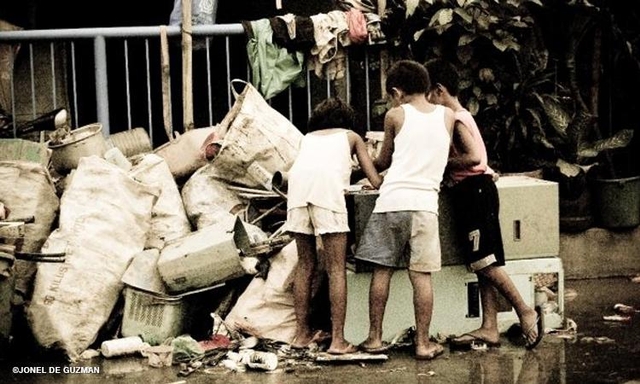
The report said in Metro Manila, Food Loss and Waste (FLW) is a “blind spot in finding solutions to hunger.” The UN said even before the pandemic, poor Filipinos who have no money to buy would scavenge food from garbage cans.
This was happening, the UN said, while restaurants dumped their unsold produce in garbage cans and consumers stockpiled food without a consumption or meal plan.