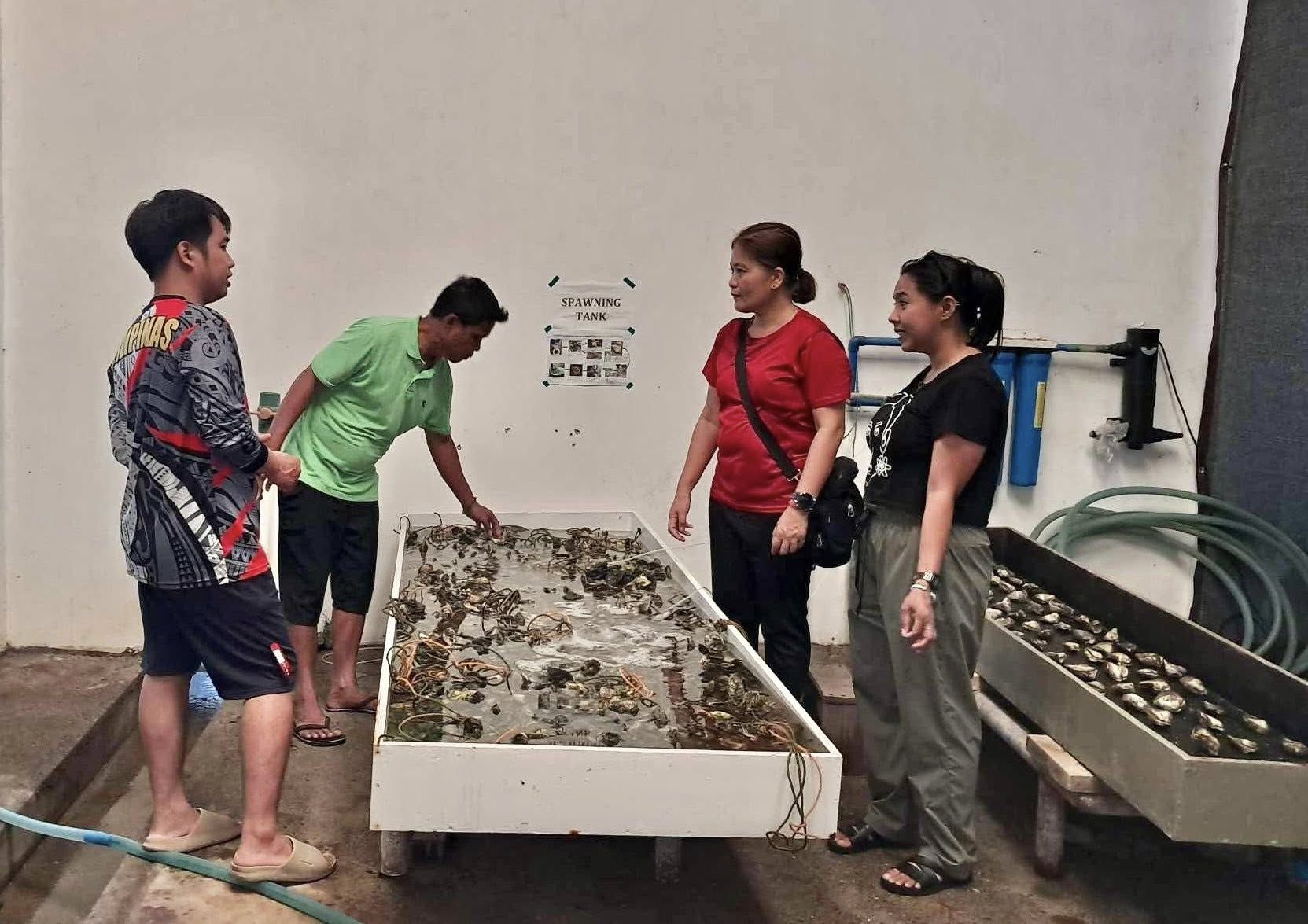
In a bid to revitalize shellfish production in regions affected by Harmful Algal Blooms (HABs), the BFAR-5 Fisheries Production and Support Services Division (FPSSD) conducted the deployment of technology demonstration of six shellfish longline units on April 21-25, 2025, in Belen, Calabanga and Cabugao, Siruma in partnership with the local government units.
Ahead of the installation, water quality testing and acclimatization of hatchery-bred shellfish spats were conducted to ensure optimal conditions for growth and survival in the area.
Led by Shellfish Focal Fhel-Ann M. Dalaodao, the team successfully installed six longline units, consisting of 362 strings of oyster and green mussel spats. The units featured high-density polyethylene (HDPE) floaters, replacing the traditional stake method commonly used in local shellfish farming.
The initiative is part of the National Shellfish Livelihood Program (NSLP), which is implemented by the BFAR National Fisheries Development Center (NFDC). Under the program, it aims to revitalize shellfish production in regions affected by harmful algal blooms (HABs). Further, the use of longline promotes sustainable aquaculture and complies with production standards.
Overall, the project aims not only to restore shellfish production in HAB-affected regions but also to provide sustainable livelihood opportunities to thirty fisherfolk beneficiaries in Calabanga and Siruma.
Through this activity, FPSSD reaffirms its commitment to strengthening coastal resilience, advancing sustainable aquaculture technologies, and supporting the economic recovery of local fisherfolk.
Source: BFAR Bicol