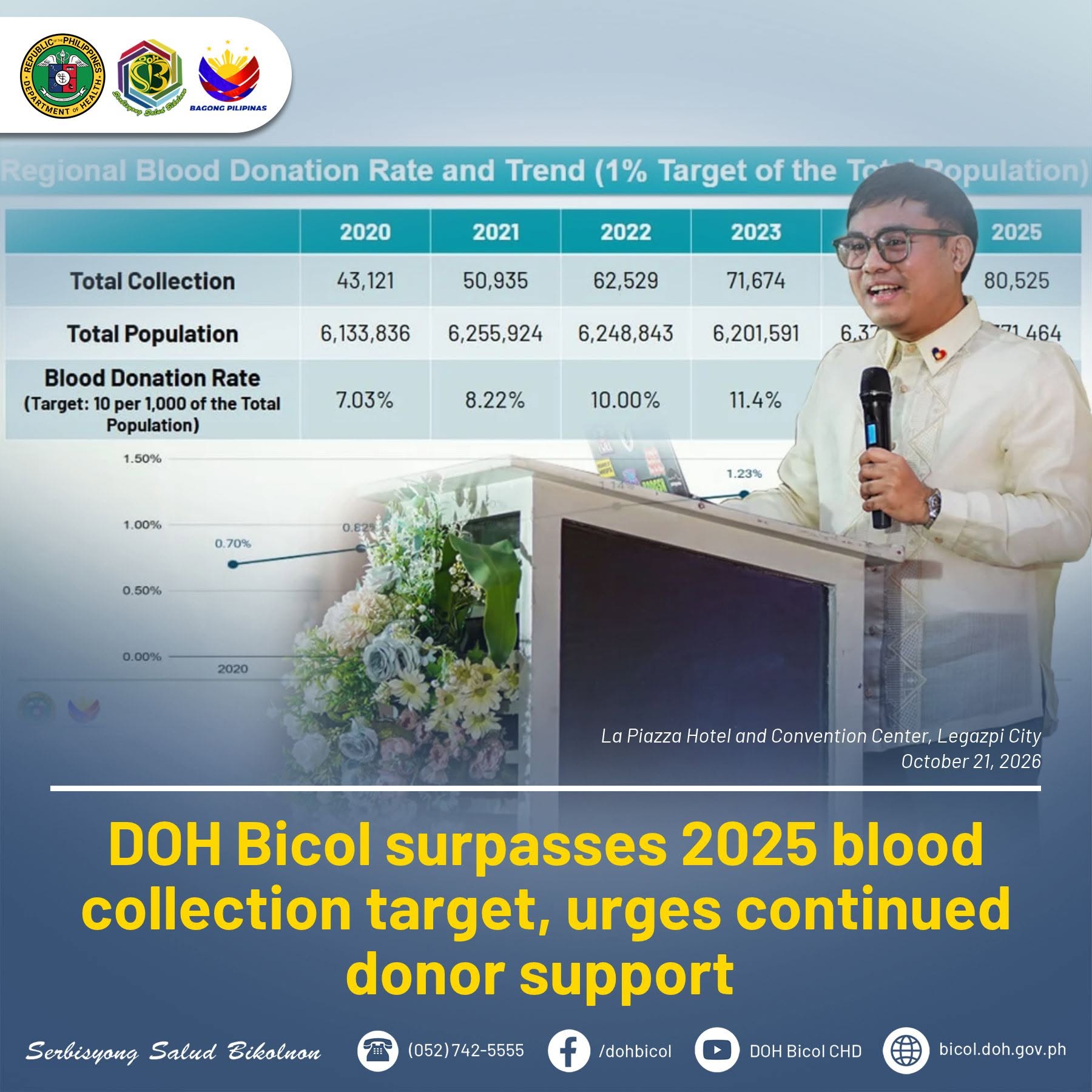
The Department of Health Bicol Center for Health Development (DOH Bicol CHD) surpassed its 2025 regional blood donation target, collecting 80,525 units of blood across the region.
The achievement represents a blood collection rate of 1.26% of the total population in Bicol, exceeding the National Voluntary Blood Services Program’s (NVBSP) annual regional target of 1%.
During the Bicol Sandugo Summit and Awards held on October 21, Regional Blood Program Coordinator Dr. Raymond Martin Corpus highlighted the importance of sustaining blood collection efforts while maintaining stringent safety standards and the challenges posed by transfusion-transmissible infections (TTIs).
Under the NVBSP, all donated blood units undergo mandatory laboratory screening for five major TTIs: human immunodeficiency virus (HIV-1 and HIV-2), hepatitis B virus, hepatitis C virus, syphilis, and malaria. Blood units that test reactive must be removed from the available supply to protect recipients. This underscores the need for a steady pool of voluntary donors to help offset units that cannot be used and maintain a safe and adequate blood supply.
Over the past three years, Bicol has demonstrated consistent growth in blood collection, with its blood donation rate increasing from 1.00% in 2022 to 1.14% in 2023 and 1.23% in 2024, before reaching 1.26% in 2025.
Dr. Corpus attributed this sustained progress to the strong collaboration among local government units (LGUs), blood service facilities, and partner organizations in promoting voluntary blood donation and strengthening blood safety initiatives in their respective communities.
The DOH Bicol CHD continues to encourage voluntary, non-remunerated blood donors to donate regularly. It also underscores the importance of public education and advocacy to raise awareness among the public. Sustained donor recruitment, community engagement, and active participation remain essential to ensuring a reliable supply of safe blood for emergency cases, surgical procedures, and patients requiring ongoing treatment for chronic illnesses.
Source: DOH Bicol CHD