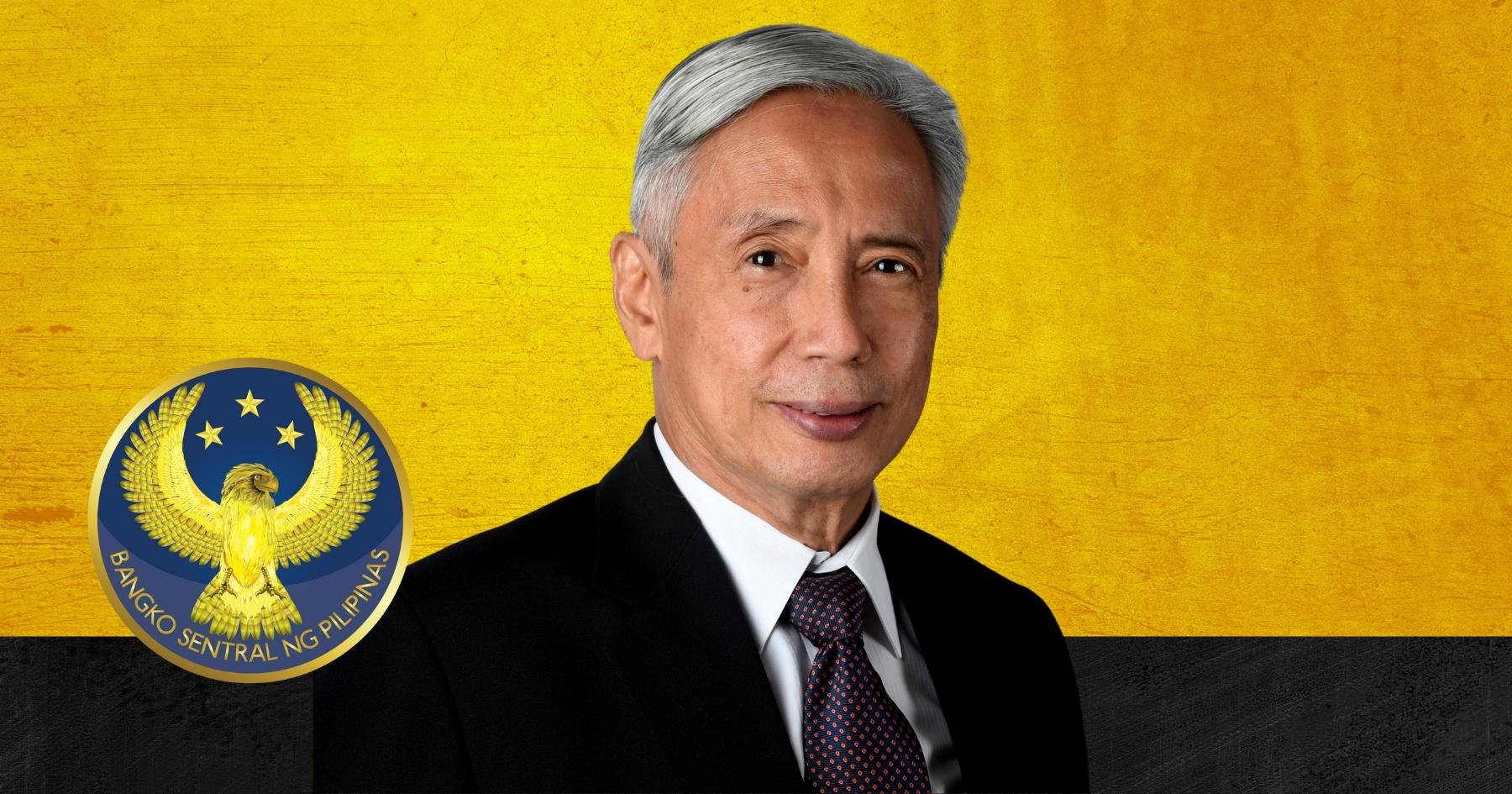
MACTAN, Cebu—Bangko Sentral ng Pilipinas Governor Felipe M. Medalla said on Monday the country’s inflation rate is “falling rapidly” such that it can be below 4 percent by September, October or November.
“The low inflation in the last three months, the price index is a bit lower now than in January. If you’re sure this is a permanent trend, clearly we must pause. Because there will be no need for another one. But then you know, we’ve been surprised so many times before,” Medalla said at the sidelines of the Financial Sustainability Conference.
“Its hard to cut because if we’re cutting and the US [Federal Reserve] is not, at that time that the interest rate differential is a major factor by the forex players,” the Philippines could be in a tricky spot, he explained, adding, “if the US is not cutting, it’s hard for us to be cutting lower.”
According to a Bloomberg report, Medalla said a pause is the “most likely result” at the BSP’s May 18 meeting, as Finance Secretary Benjamin Diokno, who sits on the seven-member monetary policy board, said that he will vote for a pause in the benchmark interest rate in this week’s decision.
“That’s not a bad guess, but I cannot speak for the board,” Medalla said, referring to Diokno’s comment.
National Economic and Development Authority Secretary Arsenio Balisacan had warned that raising interest rates further may dampen economic growth ahead as he foresees pent-up demand easing.
BSP is forecast to hold its benchmark rate at 6.25 percent on Thursday, according to almost all economists surveyed by Bloomberg.
Inflation target
Medalla said expectations will be well within the bank’s inflation target by next year.
The BSP’s inflation target this year is between 2.5 percent and 4.5 percent; and next year, at 2 percent and 4 percent. Medalla said monetary authorities believe that inflation is falling rapidly mainly as the government relaxed importation of goods.
“But I think that that will not last very long. So, the I think the inflation stance of the government now will be weighted in favor of controlling inflation versus the tremendous pressure to do something with the farmers. But right now, I think the government has made the right choice,” he said.
Next year, however, may not be as good as this year, due mainly to base effects.
“So, even if the latest growth rate is higher, the large base will prevent, will make it harder to grow by the same rate next year,” he said.
Moving forward, Medalla said regulators should continue to strike a balance between establishing strong institutions while encouraging innovation in the design of tools that would have the requisite safeguards to build-in resilience. This balance would help crisis-proof the system.
“It’s finding the middle [where] there’s enough creativity [encouraged] but without thinking in terms of the public cost of mistakes,” Medalla said.
Today’s environment poses a different set of challenges for the authorities as well as the market stakeholders, he said.
The BSP and the International Monetary Fund are jointly hosting a conference, attended by 14 central banks and financial authorities from the region as well as six regional and global organizations. The private sector was fully represented with 31 organizations.
The theme of the conference —“The New Frontier of Financial Stability: Global Problems, Global Solutions, Local Challenges,”—suggested that global developments invariably spill over to various jurisdictions. The participants of the conference then looked at how Asia can find a collective solution.
With a report by Bloomberg