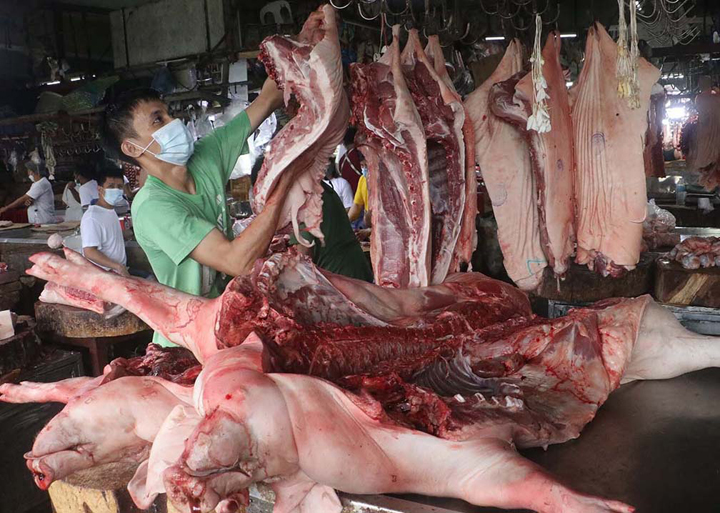

THE P1.3 billion in foregone revenue from imported pork tariff could have gone to fighting the African swine fever (ASF) and also uplifting small farmers and small entrepreneurs of the pork industry, Senator Francis N. Pangilinan said on Wednesday.
The foregone revenue was reported from April 9 to June 11 as the Philippines imported at least 76 million kilos of pork under lower tariff on both in-quota and out-quota imports of swine meat.
The policy is contained in Executive Order 134 issued in May which charges 10 percent for the first three months and 15 percent in the succeeding nine months imports within the minimum access volume (MAV). Those outside the MAV will be slapped 20 and 25 percent, respectively, for the first three and succeeding nine months.
“Pork remains expensive; liempo is being sold for P380 per kilo. The cause of this is African swine fever,” Pangilinan said a statement.
Pangilinan reiterated his earlier position that slashing tariff was not the best solution since it undermines the local pork industry and deprives the government of needed earnings. The lawmaker filed Senate Bill 2176 which seeks to create a Swine Competitiveness Enhancement Fund from pork import tariffs.
“What’s tragic here is when you ask around, no Filipino consumer—whether those who shop in wet markets or supermarkets—will say that they felt the easing of pork prices. So who benefited from this policy?” he asked.
“We warned from the start that such policy is never a win-win solution but a losing proposition to the government, the local industry, and the consumers.”
Officials said the lower tariff aims to arrest the spiraling pork prices due to the lack of supply as an effect of ASF which decimated a big portion of the local swine industry.
But Pangilinan said consumers continue to complain of high pork prices, especially in wet markets.
“The lowering of pork prices was not felt by our people. What is very evident based in government data are the revenues we did not earn because of the slashed import duties,” he said.
With lower revenues, Pangilinan said, the government will have less money to augment programs for the local hog raisers who badly need support to rise from the onslaught of ASF and to be competitive against imported pork.
The lawmaker said the Senate will continue to keep watch on developments and review the policy when needed to make it more responsive to the local industry and consumers.
Malacañang earlier heeded Pangilinan’s call to declare a state of calamity to allow government to augment the funds of the Department of Agriculture for calamity relief and rehabilitation, as well as provide indemnity funds for hog farmers and additional funding for biosafety measures.
He also proposed that affected hog raisers be given cash-for-work opportunities to help them get back on their feet.