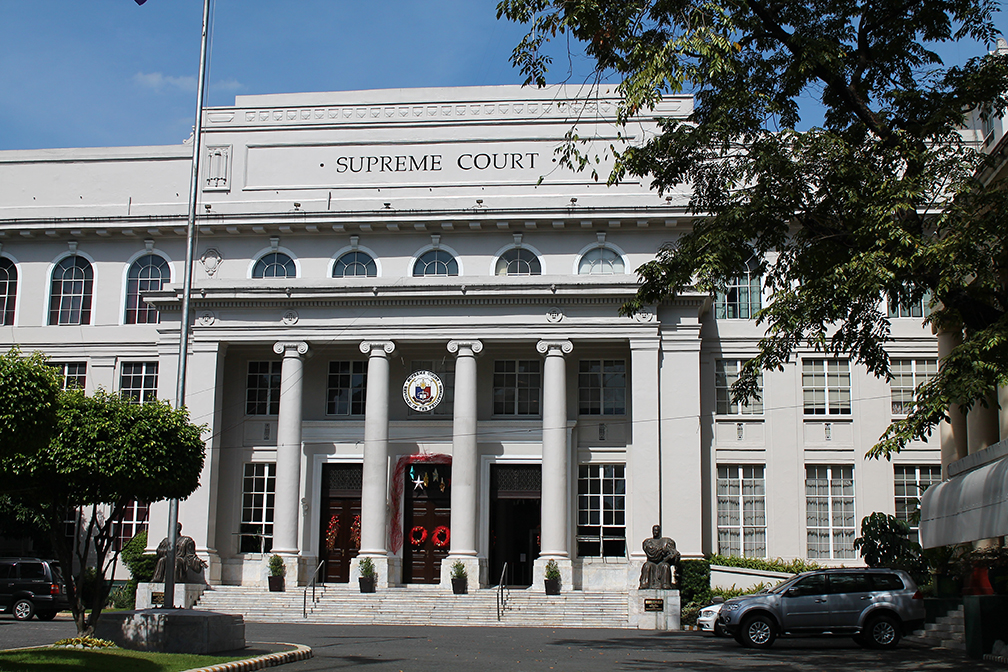

THE Supreme Court has affirmed the constitutionality of the imposition of Common Use Service Area (CUSA) fee by the Subic Bay Metropolitan Authority (SBMA) on all its tenants to recover its expenditures in maintaining the Subic Bay Freeport Zone (SBFZ).
In a 19-page resolution, the Court’s First Division denied the petition filed by Philip Morris Philippines Manufacturing Inc. seeking the reversal of the decision issued by the Court of Appeals, which affirmed the December 2, 2015 ruling of the Regional Trial Court (RTC) of Olongapo City, Branch 75, dismissing its plea to stop the imposition of CUSA.
Philip Morris questioned the validity of the imposition of CUSA Fee, arguing that it is, in reality, a property tax.
The tobacco company insisted that Republic Act 7227 (Bases Conversion and Development Act of 1992) and its Implementing Rules and Regulations (IRR) did not grant SBMA with the power to tax but only to collect reasonable fees for the implementation of a sanitation system, collection and disposal of garbage, and/or installation and maintenance of a sewage system.
Furthermore, it noted that under Section 12(c) of RA 7227, the SBMA is barred from imposing national and local taxes within the Subic export processing zones, other than the 5-percent gross receipts tax (GRT) imposed on all locators.
In its decision dated December 15, 2016, the CA affirmed the RTC decision, declaring that while SBMA has no power to tax, it is empowered by law to regulate the operation and maintenance of utilities as well as other services, and to fix just and reasonable rates and charges for such.
The petitioner elevated the issue before the SC, saying that the CA committed serious and reversible error in holding that SBMA is authorized under RA 7227 and its IRR to impose CUSA fee on its tenants as it had earlier imposed garbage fee and road user’s fee which validity were not questioned.
It also argued that the CUSA fee is unconstitutional for being violative of the non-impairment and equal protection clauses of the 1987 Constitution.
It said the imposition of the CUSA fee makes doing business in the SBFZ costlier and more difficult.
In upholding the CA ruling, the SC held that RA 7227 and its IRR grant the SBMA with authority to fix reasonable service and utility fees necessary for the establishment, operation and maintenance of utilities, other services, and infrastructure of the SBFZ.
“Necessarily, these fees would include the charges collected by SBMA from its tenants to cover expenses for security services or law enforcement, fire protection and prevention, street cleaning, and street lighting, which comprise the CUSA Fee,” the SC stressed.
Furthermore, the Court noted that under Administrative Order 31 dated October 1, 2012, GOCCs, such as SBMA, have been directed, not only to rationalize existing fees but also to impose additional charges “to enable the government to effectively provide services without straining the national government’s sources.”
“The SBMA not previously collecting charges or fees for the subject services from business establishments or locators in the SBFZ is not a bar to the subsequent implementation of the CUSA Fee. The law clearly granted it authority to impose reasonable fees and charges for the provision of the municipal services covered by the CUSA Fee,” the SC explained.
The Court said it found no merit in Philip Morris’ assertion that the CUSA fee is in reality a tax.
“Hence, We reject the position made by Philip Morris that the CUSA Fee is a tax measure since the revenue generated therefrom did not exceed the cost of the regulation,” it noted.
The SBMA implemented on October 1, 2012 the policy on CUSA Fee to recover the expenses for the following municipal services for tenants at the SBFZ: 1) Security Services or Law Enforcement; 2) Fire Protection and Prevention; 3) Street Cleaning; and 4) Street Lighting.
The CUSA Fee Policy was filed with the University of the Philippines (UP) Law Center and letters were sent to all locators and residents.
Public hearings were also conducted regarding the implementation of the said policy.
Philip Morris received billings for the CUSA Fee and was charged an amount of P59,166.12 per month at a rate of P1.20 per sq.
To avoid penalties, Philip Morris paid the amount under protest.
On August 30, 2013, Philip Morris filed a complaint for injunction with application for Issuance of a writ of preliminary injunction against SBMA.