THE dismal performance of the livestock and poultry subsectors slashed the country’s farm output in the first quarter by 3.3 percent despite an abundant crop harvest, the Philippine Statistics Authority (PSA) said on Monday.
The reduction in total output, driven by a 23.2-percent contraction in livestock production, is “bad news” as the country started the celebration of Farmers and Fisherfolk Month on May 10.
The Department of Agriculture (DA) noted that the “good performance” of the crops and fisheries subsectors was not enough to “pull up” agriculture growth in the first quarter.
This is now the second consecutive quarter that agricultural output declined and is the steepest January-to-March period decline since the first quarter of 2016, based on historical PSA data.
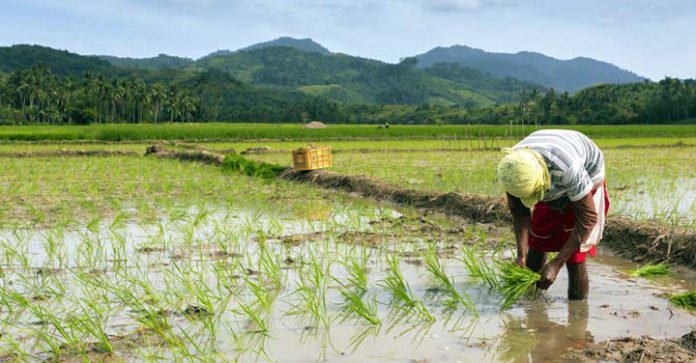
In its quarterly report, the PSA said crops production, which accounts for more than half of total agricultural output, grew by 3.3 percent on the back of an 8.6-percent and 6.5-percent increase in the production of palay and corn, respectively.
Fisheries production inched up by 0.6 percent from January to March 2021, contributing 13.7 percent to the total agricultural production, PSA added.
However, the PSA report showed that livestock output declined by 23.2 percent with hog production—the major contributor for the subsector—contracting by nearly 26 percent.
Likewise, poultry output fell by 7.4 percent with chicken production declining by 11.2 percent, PSA added.
“With this performance of the Agriculture sector, we will continue to work much harder and further improve our services with countryside heroes—the farmers and the fisherfolks,” Agriculture Secretary William D. Dar told the BusinessMirror.
Dar said they expected the “poor performance of the hog industry” since their efforts to control the dreaded african swine fever (ASF) and repopulate ASF-free areas “are yet to bear fruits.”
“We will continue to implement our ‘Plant, Plant, Plant program’ that is mainly focused on increasing our basic food commodities like, rice, corn, vegetables, livestock, poultry, and fisheries—comprising more than 70 percent of our agricultural GVA,” he added.
The value of agricultural output at current prices in the first quarter rose by 8.2 percent to P484.76 billion on the back of higher farm-gate prices across major commodities, PSA data showed.
The average farm-gate price of rice in the first quarter rose by 3.8 percent while average quotations for hogs and chickens increased by 51.8 percent and 26.4 percent, respectively.
‘More resilient’
Monetary Board member V. Bruce J. Tolentino said the agriculture sector’s performance in the first quarter is “better than before and more resilient despite the pandemic.”
“Rice production is up. Rice consumer prices are lower and more stable. Farm prices are stable. And farmers are receiving the assistance provided by RCEF [Rice Competitiveness Enhancement Fund], resulting in improved productivity. That’s the better part,” Tolentino told the BusinessMirror.
“These improvements have resulted in a more resilient agriculture sector,” he added.
However, Tolentino noted that major challenges in the sector remain, “mostly in transforming regulation to productivity support across a range of commodities particularly meats and fish.”
Tolentino said the government must accelerate reforming the agriculture sector and should deregulate industries while focusing its resources on productivity programs to improve the sector’s performance.
“The reform agenda must be accelerated, focusing on productivity rather than regulation. Government should deregulate and focus its energies and budgets on programs to improve productivity of all commodities,” he said.
‘Prolonged neglect’
Philippine Chamber of Agriculture and Food Inc. President Danilo V. Fausto told the BusinessMirror that the contraction in terms of agricultural production volume is a “symptom of the prolonged neglect” by government in investing in the sector.
Fausto added that the disparity in budget allocation among agricultural subsectors contributed to the systemic ills of the sector, especially with the contraction in the livestock and poultry subsector.
He pointed out that 40 percent of the total agricultural budget goes to rice, while the livestock and poultry subsectors, which contribute one-third of total agricultural output, do not get substantial funding support from the government.
“We expect more contractions in the production of agriculture, especially in the livestock and poultry subsectors because of the wrong policies of the government,” he said.
“Overall, the government has no strategic plan or goal for the agriculture sector. There’s lack of foresight and the government is just being reactive to problems instead of proactive,” he added.
Economist Pablito M. Villegas echoed Fausto’s sentiments regarding the disparity in budget allocation, but commended the successful interventions of the DA in improving the crops sector’s productivity.
“We commend him on the better performance of the crops sector, particularly rice and corn, which is a major part of the country’s food security,” Villegas told the BusinessMirror.
However, he noted that the overall performance of the agriculture sector is “bad news” to farmers and fisherfolks, who are being celebrated annually in the month of May.
The DA opened the first day of the 2021 Farmers’ Fisherfolks’ Month on May 10, the same day the PSA released the report on the agriculture sector’s first quarter performance.
Villegas urged the DA to “listen to the plight of the hog and poultry sectors” to address their problems and ensure recovery of these industries.