
THE Covid-19 Inter-Agency Task Force (IATF) is finalizing the guidelines for the proposed granular lockdowns, which seek to allow more mobility while isolating heavily infected areas.
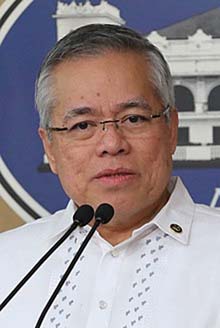
Trade Secretary Ramon M. Lopez told reporters over the weekend that the IATF has agreed to launch a pilot test of granular lockdowns in Metro Manila beginning September 8, a day after the modified enhanced community quarantine (MECQ) restriction is lifted in the region.
The Department of Trade and Industry (DTI) chief said that the next phase of granular lockdowns is eyed to be implemented in areas outside the National Capital Region (NCR) next month.
“[The] lockdown will be limited to a few and small hotspot areas and this will allow some more jobs to be back, those outside the small hotspot areas,” Lopez said.
But this proposal has yet to be approved by Malacañang.
In a recent radio interview, Lopez said that the granular lockdown guidelines break down the degree of restrictions into levels 1-4; 4 is the most restrictive.
In finalizing the guidelines, the DTI official said the IATF is fine-tuning the policies in order to make them more specific and effective. He said that hard lockdowns may be imposed on a neighborhood, street or subdivision that has heavy Covid-19 transmission.
Lopez stressed that people are not allowed to go in and out of the vicinity under lockdown, except for health-care workers.
For workers who need to go to their workplace, he said the companies should provide temporary housing as they will not be allowed to return. Otherwise, the employees should work from home, he noted.
The lockdown may be placed for 14 days, he said, explaining that the period may be adjusted depending on the situation.
The trade official said that implementing granular lockdowns will help the business sector recover as it will allow more reopening. But he pointed out that the operating capacity will depend on the level of restriction.
Previously, the DTI said that micro, small and medium enterprises (MSMEs) cannot afford to have another massive lockdown because their cash flows have been depleted already.
Another major lockdown will force MSMEs to trim their workforce or temporarily close operations, Lopez warned, noting that a granular lockdown will alleviate their difficulty amid the pandemic.
In addition, Lopez earlier asked for 20-percent capacity in establishments for the vaccinated population to allow further mobility even during lockdowns.
He said that the vaccinated Filipinos should be allowed to dine in in restaurants and go to barbershops, parlors and other personal care service outlets.
The trade official said it would be “safer for vaccinated” people to visit the “restricted sectors” under MECQ. This way, he said there would be no anticipated uptick of severe Covid-19 cases, in addition to mitigating the number of patients in the intensive care units.
In the recent community quarantine guideline, outdoor and indoor dine-in services in NCR are excluded from the list of activities allowed under MECQ. Take-out delivery for restaurants, however, is 100-percent allowed.
Personal care services—including beauty salons, barbershops, beauty parlors and nail spas—are usually allowed at 30-percent capacity under MECQ, but the government banned them in Metro Manila.