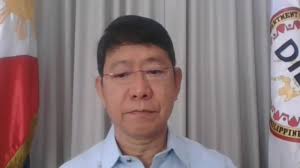
INTERIOR Secretary Eduardo M. Año said the full devolution of basic services and facilities from the national to the local government units will begin next year, simultaneous with the increased share of local government units in all national taxes and revenues, following President Duterte’s signing of Executive Order 138.
“With EO 138, the long-cherished goal of LGUs to finally implement the full devolution of powers and resources mandated by the 1991 Local Government Code will happen under this administration. Under full devolution, many good things are coming our LGUs’ way and the public in general starting next year,” Año said a statement on Monday.
Duterte’s EO, he said, will ensure that the policy of decentralization as enshrined in the Constitution and the Local Government Code, as well as the increase in the LGU’s just share in national taxes, as provided for in the Mandanas-Garcia ruling of the Supreme Court, will be carried out systematically and smoothly.
“We thank President Du-terte for staying true to his commitment to local autonomy and full devolution through the signing of this EO. This will start the ball rolling and ensure that LGUs will be ready for bigger responsibilities that come with more financial resources. Dahil sa full devolution, ‘Aangat ang Lakas ng Lokal’ sa tulong ng ‘Dagdag na Pondo’ na magdudulot ng ‘Angat Serbisyo’ para sa mga mamamayan [Because of full devolution, the strength of LGUs will be increased with the help of more funds, which in turn will mean more services],” he said.
Año recalled that in Mandanas et al. v. Executive Secretary et al., the Supreme Court held that all collections of national taxes, except those accruing to special purpose funds and special allotments for the utilization and development of the national wealth, should be included in the computation of the base of the just share of the LGUs.
In 1991, the Local Government Code mandated the devolution of basic services to LGUs. This was anchored on the premise that LGUs are in a better position to address the needs of their constituents and can therefore deliver better services. However, full devolution was never achieved because the funds necessary to implement full devolution were never fully downloaded to LGUs.
The DILG chief said that EO 138 is a leap towards the provision of a more responsive and accountable local government structure instituted through a system of decentralization, whereby local government units shall be given more powers, authority, responsibilities, and the corresponding financial resources.
“Provinces, cities, and 1st to 3rd class municipalities who have more capacity will enjoy more autonomy in managing their resources. The DILG will then focus and assist 4th to 6th class municipalities so they will be better equipped to carry out the additional functions and services devolved to them,” he said.
According to Año, a Committee on Devolution (ComDev) will also be created to oversee and monitor the implementation of administrative and fiscal decentralization goals of the EO; resolve issues and concerns that may arise in the implementation of the EO; ensure the elimination of any regulatory or fiscal controls on the automatic release of LGU shares; and adopt mechanisms to ensure the continuous delivery of public services by the national government agencies and LGUs, among others.
The DILG secretary will serve as cochairman of the ComDev together with the Secretary of the Department of Budget and Management (DBM). Among the committee members are the Socioeconomic Planning Secretary, the Secretary of Finance, the Executive Secretary, and the Presidents of the Leagues of Provinces, Cities and Municipalities of the Philippines, the Liga ng mga Barangay ng Pilipinas, and the Union of Local Authorities of the Philippines.